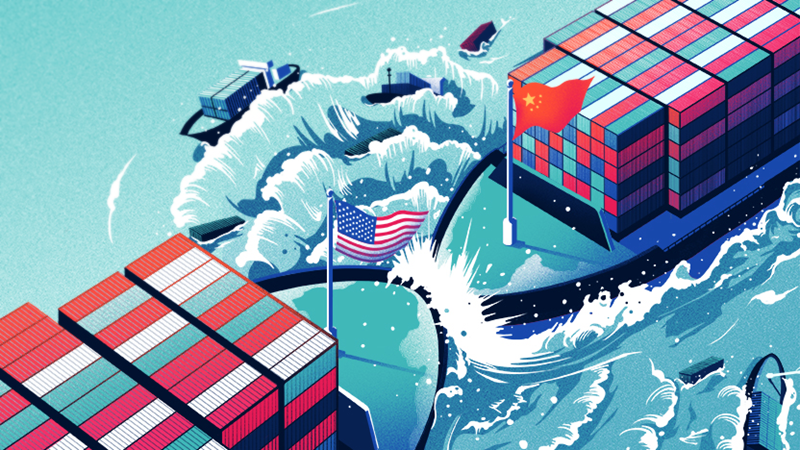
Mỹ nâng Tariff – Lợi & Hại?
By Le Hoang
/ 9. July 2025
Từ thời Trump đến Biden, rồi quay lại Trump, xu hướng nâng thuế nhập khẩu, đặc biệt với Trung Quốc...
Read More







Views: 0
Views: 0

Every million tonnes of coal has recently been costing China’s steel mills more than US$400 million, compared with around US$250 million paid by steel mills everywhere else. The difference is entirely explained by China’s embargo on Australian coal.
Since China’s mills use almost 2 million tonnes of coal every day, the premium it pays above coal costs in the rest of the world adds up to about US$2 billion a week.
If the embargo were dropped tomorrow, Chinese mills wouldn’t make that entire saving: world prices would rise once Australian coal started flowing to China, but Chinese prices would surely fall.
China’s ban on Australian coal purchases from around November last year has caused huge distortions in the global coal market, with separate Chinese and rest-of-the-world pricing developing for both metallurgical coal used by steel mills and thermal coal used by power stations.
The disruption has been greatest for metallurgical coal. Australian exports account for 58% of the global seaborne trade in metallurgical coal, compared with 21% in thermal coal. In 2019–20, China took a little over a third of Australia’s premium metallurgical coal exports and Australia supplied about 55% of China’s metallurgical coal imports.
As BHP expressed it in its annual results report, ‘Australia was both the largest seaborne exporter of metallurgical coal and the largest seaborne supplier to the clearing market, China. Therefore, this bilateral trading relationship was much more than just one of many in a vibrant and competitive global trade—it was the sun around which the other planets of the [metallurgical] coal solar system orbited.’
The ban caused immediate pain in both China and Australia. A queue of 46 ships carrying around 5 million tonnes of Australian coal developed off the Chinese coast by December as the Chinese owners of these cargoes tried unsuccessfully to get them landed and cleared through customs.
The price for Australian coal plunged, while prices inside China jumped, with an immediate gap of US$85 per tonne opening between the two (after allowing for freight). Suppliers from the United States and Canada that traditionally sold coal into Europe switched to China, where they could double their returns, while European mills turned to Australia, where they could get cheap supply.
China’s authorities assumed that the loss of Australian coal would be made up comfortably by other suppliers and by their own huge reserves. But they were hit by a succession of supply shocks.
Mongolia replaced Australia as China’s largest source of supply, but the Covid-19 pandemic forced the closure of the two main coal truck routes in May. BHP reported that the trade which had carried 720 coal trucks a day had slowed to a trickle. There was some recovery in July, but then another closure in late August.
There are limits to the volumes available from suppliers like the US. China’s total metallurgical coal imports slumped from 46 million tonnes in the first seven months of 2020 to 26 million between January and July this year.
China’s steel mills consume almost 700 million tonnes of coal a year and obtain 88% of it from domestic mines, but imports are crucial both for their quality and for their flexibility in meeting demand.
However, China’s domestic supplies have also been troubled. A series of fatal accidents has forced the closure of many Chinese coalmines. Last week, a 6-million-tonne-a-year coalmine in Shanxi province was ordered to close for a month after a worker was killed. This followed the closure of 22 coalmines in the province after three mining accidents in June.
According to the South China Morning Post, a quarter of production capacity in Shanxi—the province that produces the most coal—has been shut down for safety reasons. Coalmine closures for safety reasons have also been ordered in Henan and Hebei provinces.
Following last week’s closure, top-quality coking coal from Shanxi soared to ¥3900, equivalent to US$613, a tonne. Imported coal for steel mills rose to a record US$412 a tonne.
The increase in China’s prices has dragged Australian prices higher. Last week, coal was trading at US$274 a tonne, up from just US$100 a tonne after the Chinese embargo was imposed.
China’s steel mills have been able to pass the increased costs of raw materials on to their customers. With the Chinese steel industry under orders to keep production this year to no more than the 1.06 billion tonnes produced last year, there’s competition among customers to secure supplies, which is pushing steel prices higher.
The share price of the biggest producer, BaoSteel, has risen by 60% to a record level since June as the force of the government’s production limits has become apparent.
The cap on steel production is in pursuit of the government’s environmental objectives of improving air quality and capping carbon emissions before 2030, while authorities have also been keen to lessen their dependence on Australian iron ore.
Imposing trade barriers always causes some harm to the country responsible. There were pleas from China’s breweries not to impose tariffs on Australian barley as it was hard to replace with barley of the same quality. Chinese consumers are being denied Australian lobster, which they valued, and are now paying premiums to obtain it through contraband routes. The Chinese authorities have always thought such costs were minor relative to their broader geopolitical aims.
However, rising steel costs are now filtering through to inflation more generally. Chinese factory gate prices rose 9.5% over the year to August, the fastest rate in 13 years.
While China’s recent curbs on its technology companies, home-tutoring services and entertainment industry have been gathering global attention, it may be that the regulatory interventions in the steel industry, including the embargo on Australian coal, wind up causing the greatest dislocation to the Chinese economy.
Quelle: https://www.aspistrategist.org.au/beijings-ban-on-australian-coal-is-hurting-china/
Views: 0
Views: 0

Nguồn: https://baotintuc.vn/thoi-su/chuyen-tham-chau-au-cua-chu-tich-quoc-hoi-vuong-dinh-hue-the-hien-chinh-sach-da-dang-va-doc-lap-cua-viet-nam-20210910194112584.htm
Views: 0

In a joint statement after the Australia-France Foreign and Defence (2+2) Ministerial Consultations for the first time in a virtual form on August 30, the ministers expressed their strong opposition to destabilising or coercive actions that could increase tensions in the waters, which is internationally known as the South China Sea.
They reaffirmed the importance of freedom of navigation and overflight consistent with international law and agreed to closer maritime cooperation in the Indo-Pacific, including through future joint transits.
The statement underscored that Australia and France will strengthen cooperation to implement each side’s strategy in the Indo-Pacific and maintain the commitment of other regional partners, including the US, in upholding an open, inclusive and resilient Indo-Pacific in accordance with international law.
They reaffirmed the importance of ASEAN centrality and the critical role of ASEAN-led fora, “which sit at the apex of the regional architecture, in promoting peace, stability, security and prosperity”./.
Views: 0

Views: 0
Can thiệp và đối kháng
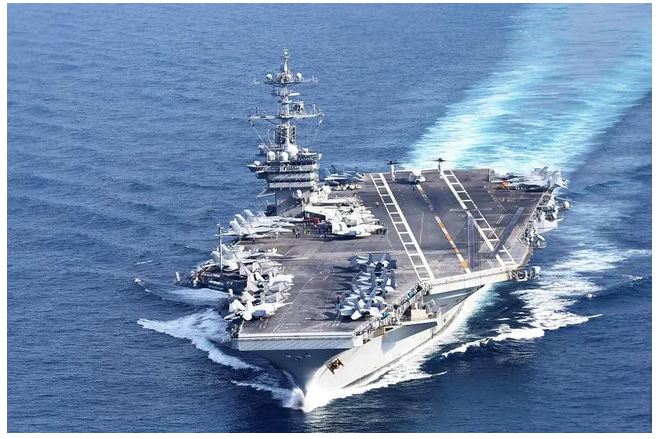
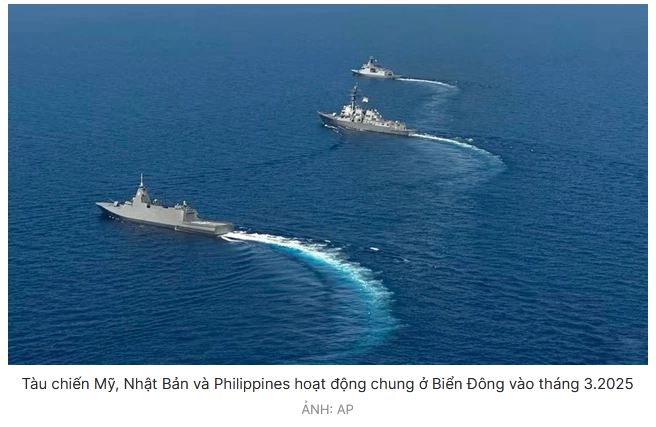
Chính quyền Joe Biden tiếp tục chủ trương cứng rắn với Trung Quốc (TQ) ở Biển Đông và hối thúc đồng minh can dự. Tháng 1/2021, một chiến hạm Canada đi qua eo biển Đài Loan để tới điểm tập trận chung ở Biển Đông cùng Australia, Nhật Bản và Mỹ. Ngày 9/2/2021, hai nhóm tàu sân bay Mỹ USS Theodore Roosevelt và USS Nimitz có cuộc tập trận chung ở Biển Đông. Tháng 2/2021, Hải quân Pháp điều tàu ngầm tấn công SNA Emeraude có tàu BSAM Seine hỗ trợ đến tuần tra ở Biển Đông, điều tàu đổ bộ tấn công Tonnerre và tàu khi trục Surcouf từ cảng Toulon tới biển Đông thực hiện nhiệm vụ tuần tra và huấn luyện 3 tháng. Cùng tháng 2/2021, tàu sân bay HMS Queen Elizabeth hiện đại nhất của Anh cùng chiến đấu cơ thế hệ 5 tàng hình F-3 và các máy bay trực thăng đã rời cảng Portsmouth tới Biển Đông, được hộ tống bởi 4 tàu khu trục, 1 tàu ngầm hạt nhân, 2 tàu tiếp liệu và tiếp tế. Ngày 5/4/2021, các tàu chiến Mỹ, Nhật, Australia, Ấn Độ và Pháp tham gia tập trận hải quân La Perouse kéo dài 3 ngày ở vịnh Bengal.

Hình thức “Bộ tứ +” có thể mở rộng với sự tham gia của các thành viên khác. Đức, Anh sẽ gửi tàu chiến đến Biển Đông cuối năm 2021. Pháp, Đức, Hà Lan đang soạn thảo chiến lược Ấn – Thái của EU. Tàu hộ tống lớp Bayern của Đức sẽ tới châu Á và đi qua Biển Đông vào tháng 12, đánh dấu lần đầu tiên tàu chiến Đức tới đây từ năm 2002.
Đồng thuận Washington về sự can thiệp quân sự ở Biển Đông của Mỹ cùng đồng minh, đối tác và phản ứng đối kháng, quyết đoán không khoan nhượng của Bắc Kinh sẽ làm gia tăng nguy cơ đụng độ quân sự với những hậu quả khó lường nhất là khi Bắc Kinh đã thông qua Luật hải cảnh mới cho phép nổ súng trước.

Nguy cơ và ứng phó
Thời gian tới, ngoài các phiên bản đụng độ mà TQ chủ động gây ra như các trường hợp EP-3E, Impeccable, USS Cowpens và Decatur… sẽ có thể xảy ra thêm một số kiểu đụng độ khác sau:
Một là, TQ có thể thiết lập Vùng nhận diện phòng không (ADIZ) ở Biển Đông và dùng máy bay xua đuổi các máy bay của đối phương có thể dẫn tới va chạm trên không.
Hai là, trường hợp Ba Đầu cho thấy Khả năng Bắc Kinh có thể dùng “biển thuyền” dân sự để ngăn chặn tàu chiến của đối phương và gây va chạm trên biển để tạo cớ gây hấn.
Ba là, Bắc Kinh có thể sử dụng một số vũ khí trí tuệ nhân tạo như máy bay không người lái, thủy lôi thông minh và tàu ngầm mini không người lái để cản phá.
Trong trường hợp xấu nhất do đánh giá sai ý đồ của nhau và không kiểm soát được hành vi, va chạm quân sự có thể bùng phát thành xung đột hoặc chiến tranh cục bộ nhất là khi một số vũ khí trí tuệ nhân tạo được kích hoạt. Kết hợp sự hung hăng của TQ và sự dao động của Mỹ khiến khu vực có thể rơi vào hỗn loạn. Ấn Độ Dương – Thái Bình Dương hiện nay giống như châu Âu trước chiến tranh – mất cân bằng, trật tự rạn nứt và không có liên minh rõ ràng để giải quyết vấn đề.
Do đó, cần đặt việc giải quyết vấn đề va chạm quân sự ở Biển Đông trong khuôn khổ cấu trúc an ninh khu vực đang định hình. Ba bài học châu Âu trước đây Mỹ có thể áp dụng: (I) Thiết lập sự cân bằng quyền lực ở khu vực; (II) Kiến tạo một trật tự mà các quốc gia trong khu vực công nhận là chính đáng; (III) Xây dựng liên minh giữa các đồng minh và đối tác để giải quyết thách thức mà TQ đặt ra cho cả hai bên./.
TS Nguyễn Đình Luân
Views: 0
Views: 0
Views: 0
Views: 0
Views: 0
VOV.VN – Five years have elapsed since the ruling of the Permanent Court of Arbitration, the situation in the South China Sea, known as East Sea in Vietnam, remains complicated. International law is only as strong as sovereign states are willing to respect and obey it, according to a German expert

Rodion Ebbighausen, managing editor of Deutsche Welle’ Asia Department. (Photo credit DW/Philipp Böll)
Rodion Ebbighausen, managing editor of Deutsche Welle’ Asia Department, granted VOV reporter Pham Trang an interview at a recent teleconference hosted by University of Hamburg, making an in-depth analysis of the situation in the region.
Reporter: Dr. Rodion Ebbighausen, while the whole world is struggling to cope with the COVID-19 pandemic, the situation in the South China Sea in 2020 and the first half of 2021 remains complicated. How could you assess the situation in the region and give a forecast in the coming time?
Dr. Ebbighausen: The situation in the South China Sea will remain complicated and tense for the foreseeable future. A major reason for this is the rise of ideological political thinking between the People’s Republic of China and the so-called West, especially the United States.
President Xi Jinping, in his speech at the celebration of the 100th anniversary of the Chinese Communist Party, left no doubt that China will not let anyone bully, oppress or enslave it.
At the recent NATO summit as part of US president Joe Biden’s visit to Europe, NATO Secretary General Jens Stoltenberg said, “China does not share our values.”
In March 2019, the EU called China a “systemic rival” for the first time.
Globally, there is evidence of a rise in ideological camp thinking and a decline in the willingness to engage in pragmatic politics.
This is also affecting Southeast Asia, the Association of Southeast Asian Nations (ASEAN), and the conflict in the South China Sea as well.
The scope for a pragmatic solution to the conflict in the South China Sea has thus become smaller rather than larger. In view of the charged political situation China will want to demonstrate strength and show little willingness to compromise in the South China Sea.
Reporter: Five years have elapsed since the Permanent Court of Arbitration (PCA) ruled the case Philippines versus China in the South China Sea, but China has constantly rejected the ruling and taken actions to complicate the situation in the waters. So what is the role of the PCA’s ruling, you think? In your opinion, what measures should the international community take to prevent China from repeating such actions?
Dr. Ebbighausen: The award was an important signal. But international law is only as strong as sovereign states are willing to submit to it. Regrettably, the arbitral award was not only ignored by China, but also undermined at times by the Philippines, which won a near-total victory at The Hague.
Great powers such as China and the United States respect international law only when it serves their interests. Middle powers like Germany and Vietnam and small powers, in turn, have nothing but international law to defend themselves against arbitrary actions by great powers.
Since major powers cannot ultimately be forced to comply with international law, the strategy can only be to drive up the price of violations.
To drive up the price with respect to the South China Sea, the validity of the arbitral award must be emphasized at every opportunity. In international law a steady drop wears away the stone.
Small and middle powers need to cooperate more. In this respect, ASEAN is the right answer for Southeast Asia, just as the European Union is for Europe.
ASEAN and EU must insist that their member states respect international law in order to strengthen it. Only in this way will the associations be credible in defending international law against notorious ignorance on the part of the great powers.
In short, there is no magic formula or trick by which international law can be enforced by the international community (whoever that may ultimately be). International law and UNCLOS will only prevail if more and more states voluntarily submit to it. At a certain point, the binding force of international law will become so great that even China and the USA will not be able to ignore it without considerable disadvantages.
Reporter: The European Union has recently issued a cooperation strategy in the Indo-Pacific. Previously, the German government also adopted its own strategy on the Indo-Pacific. So how can Europe and Germany in particular make specific contributions to help resolve the South China Sea conflict?
Dr. Ebbighausen: The European Union’s Indo-Pacific Strategy is so far only available in a first version. A more comprehensive version is to follow in September 2021.
EU member states, including Germany, France and the Netherlands, have also each presented their own Indo-Pacific strategy.
All approaches emphasize that international law and the 1982 United Nations Convention on the Law of the Sea (UNCLOS) can be the only framework for resolving conflicts in the South China Sea.
Germany’s defense minister Kramp-Karrenbauer recently reminded her Chinese counterpart Wei Fenghe of the importance of upholding the 2016 arbitration decision.
The tone gets tougher but the EU and the aforementioned member states see themselves primarily as dialogue or cooperation partners of all parties. This explicitly includes the People’s Republic of China.
In a certain sense, the EU formulates a position beyond the great powers of the U.S. and China, although there is little doubt that the EU is closer to the US than China.
The ASEAN is seen as the natural partner in the Indo-Pacific for this third position. The EU is looking for partners who refuse the competitive logic of the U.S. and China and instead rely on multilateral cooperation and international law.
However, deeper cooperation would require greater respect for international law within ASEAN as well, for example with regard to the dire situation in Myanmar, the different view on human rights and far-reaching differences regarding freedom of the press and freedom of expression.
International law exists only as a whole. Those who want UNCLOS cannot ignore the Universal Declaration of Human Rights and vice versa.
In the short term, the EU’s Indo-Pacific strategy will have little tangible impact on the conflict in the South China Sea.
In the long term, however, if ASEAN and the EU are willing to strengthen international law through compliance and application, this approach can overcome the competitive logic reminiscent of the Cold War.
Views: 0
By Ryan Martinson
A Chinese fishing vessel appears in a sensitive location—near the Senkaku Islands in the East China Sea, a South China Sea reef, or just offshore from a U.S. military base. Is it an “ordinary” fishing boat, or is it maritime militia?
This straightforward question seldom yields straightforward answers. China does not publish a roster of maritime militia boats. That would undermine the militia’s key advantages—secrecy and deniability. Nor is it common for Chinese sources to recognize the militia affiliations of individual boats. Analysts can gather clues and make a case that a vessel is likely maritime militia, or not. That process requires painstaking effort, and the results are rarely definitive.
The People’s Republic of China (PRC) may have made that process much easier, at least in the most contested parts of the South China Sea—the Spratly Islands. Since 2014, the PRC has built hundreds of large Spratly fishing vessels, collectively called the “Spratly backbone fleet” (南沙骨干船队). As I recently suggested at War on the Rocks, most if not all of these vessels are maritime militia affiliated. This insight can help overcome the perennial challenge of differentiating wayward Chinese fishermen from covert elements of China’s armed forces.
Backbone Boats are Militia Boats
In late 2012, PRC leaders decided to invest heavily in the modernization of China’s marine fishing fleet. Prompted by a proposal made by 27 scholars at the Chinese Academy of Engineering, they implemented a series of policies to help fishing boat owners replace their small, old wooden vessels with larger, steel-hulled craft. These programs provided subsidies to large segments of the Chinese fishing industry. But the most generous support was reserved for a specific class of fisherman: i.e., those licensed to operate in the “Spratly waters,” the 820,000 square kilometers of Chinese-claimed land and sea south of 12 degrees latitude.
The Chinese government, both at the central and local levels, allocated large sums of money to reimburse fishing boat owners willing to build new Spratly boats. Hundreds of Chinese fishing boat owners took them up on this offer. The new boats constituted the “Spratly backbone fleet.”
The PRC was very particular about what kinds of boats it wanted in the new fleet. In a January 2018 interview, the Party Secretary of a Guangxi-based firm named Qiaogang Jianhua Fisheries Company (桥港镇建华渔业公司) acknowledged that while the subsidies were quite large, the new boats had to meet very exacting standards. According to the Secretary, surnamed Zhong, the vessels must be quite large, have powerful engines, and be equipped with advanced refrigeration units, among “many, many” other stipulations. Zhong declared, “The document listing these requirements (批文) is very thick. If you don’t adhere to these stipulations, then there’s no subsidy.”
Aside from controlling what types of boats got built, Beijing likely desired some control over how the new boats got used. If deployed effectively, their actions could, like at Scarborough Shoal in 2012, enable new territorial acquisitions. Conversely, if misused, they could damage China’s reputation and even precipitate a violent clash. When the program began, China already had in place a system for controlling the activities of its fishing boats in contested waters: the maritime militia.
The “maritime militia” (海上民兵) is the saltwater element of China’s national militia. Like the People’s Armed Police and the People’s Liberation Army (PLA), it is a component of the country’s armed forces. Most members of the maritime militia have day jobs, often as fishermen. However, their affiliation with the militia means that their vessels can be “requisitioned” (征用) to participate in training activities and conduct missions (service for which they are compensated). Militia members are trained and managed by PLA officers assigned to People’s Armed Forces Departments (PAFDs) in the city, county, or town in which the militiamen reside.
Subsidies for construction of the Spratly backbone fleet have been channeled both to existing members of the maritime militia and unaffiliated fishing boat owners that were willing to take the oath as a condition for the money. Among the first to receive the new boats, members of the Tanmen maritime militia benefited from the first approach. Spratly backbone boats registered to Hainan’s Yangpu Economic Development Zone offer an example of the second.
The Spratly backbone fleet appears to be managed by the coordinated efforts of provincial fisheries authorities and the provincial military system (of which PAFDs are a part). The most compelling support for this thesis comes from a 2017 report by the Guangzhou-based MP Consulting Group, which was hired to audit Guangdong’s Marine and Fisheries Bureau. The resulting 96-page document was subsequently posted on the website of the Guangdong Department of Finance.
In their report, MP consultants assessed the Bureau’s success at achieving the seven goals established for 2016. Most were domestic regulatory functions, irrelevant to this story. However, the Bureau’s seventh goal set out the organization’s mission to help protect China’s “rights” in disputed maritime space in the South China Sea. MP consultants generally gave favorable marks on this account, listing eight noteworthy achievements. These included the Bureau’s role in “promoting the construction of maritime militia forces.” Specifically, the Bureau spent 2016 clarifying the division of responsibilities between it and the provincial military district with respect to the “construction, daily operation, combat readiness training, and other relevant tasks” of the Spratly backbone fleet. This statement indicates that the Guangdong elements of the Spratly backbone fleet—and, by extension, those backbone vessels based in Guangxi and Hainan provinces—are organized into militia units jointly managed by the provincial military district and the provincial Marine and Fisheries Bureau.
Other evidence supports the hypothesis that “backbone” boats are militia boats. In August 2020, for instance, the Jiangmen City branch of the Bank of Guangzhou released a summary of its contributions to the local economy. Among these, the branch cited a 97 million RMB loan it provided to an unnamed “top tier fishing company” to build 11 Spratly backbone boats. The bank unwittingly revealed that these new fishing vessels also had “militia functions” (民兵用船功能).

A generic employment contract for crew members embarking on Spratly backbone boats offers additional evidence. The contract—which was uploaded to a Baidu document sharing platform in February 2019—outlines terms for employment at the Shanwei City Cheng District Haibao Fisheries Professional Cooperative (汕尾市城区海宝渔业专业合作社). While little is known about this cooperative, its members are clearly active in the Spratlys. Indeed, its operations manager, Mr. Zhang Jiancheng (张建成), serves as the General Secretary of the Shanwei Spratly Fishing Association (汕尾市南沙捕捞协会).
The Haibao Fisheries contract makes clear that its backbone boats are militia boats, without actually using the words “maritime militia.” It contains a section on “rights protection requisitioning” (维权征用), i.e., removing the boat from production so that it can serve state functions in disputed maritime space. According to Article 2 in that section, if required for “national defense,” the fishing vessel and its crew must “participate in training activities and rights protection tasks, and support military operations.” Article 2 also indicates that crew members must comply with arrangements made by the fishing cooperative and “obey the command of the military” and other government authorities. Article 4 states that if and when the fishing vessel is requisitioned, the boat and its crew must “obey the command of the state,” operating in the manner required, mooring in the determined location, and “completing the operational tasks according to the specific requirements.”
Section 6 outlines the rules governing crew behavior, both ashore and at sea. For example, crew members must not gamble, solicit prostitutes, or visit strip clubs while in port (Article 6). The rules also include content specific to the vessel’s militia functions. Article 7 proscribes taking photos and “divulging the secrets of the boat.” Without the permission of the captain, crew members cannot bring outsiders aboard the boat to view its “design structure and internal setup” (设计构造和内部设置).
Implications
In this article, I have argued that most if not all Spratly backbone boats are militia boats. They may actually catch fish, but their militia affiliation makes them available for state and military tasking. If this conclusion is correct, it offers useful new ways to identify Chinese maritime militia forces operating in the Spratly waters. While the PRC does not publish lists of active maritime militia boats, it does share information about which boats belong to the Spratly backbone fishing fleet. This can serve as an indicator of militia status.
How might this work in practice? At the time of this writing, a team of four Chinese fishing boats is operating illegally within 200 nautical miles of Vietnam’s coast, i.e., within the country’s exclusive economic zone (EEZ). The four vessels are named Qionglinyu 60017, 60018, 60019, and 60020, respectively, indicating they are registered to Hainan’s Lingao county (临高县). Vietnamese maritime law enforcement authorities could evict them, but before doing so they might ask, are they maritime militia?
My answer: “very likely.” A quick sifting of open-source materials reveals they are all backbone boats. This information appears in a March 2020 open letter posted on the website “Message Board for Leaders” (领导留言板). In it, the boat owners entreat PRC officials to restore fuel subsidies and other rewards for operating in “specially-designated waters” in 2018. Likely amounting to hundreds of thousands of RMB, the subsidies were withheld as punishment for operating in the Spratlys without the required licenses. To elicit special consideration, they emphasized that their four vessels were Spratly backbone boats. (Their ploy ultimately failed, as the Lingao County Bureau of Agriculture responded to their letter with a firm but polite refusal to change their decision.)
Southeast Asian countries can and should compile lists of known Spratly backbone boats. They can start with local newspapers, which are a great source for such information. In December 2016, for example, Zhanjiang Daily published an article about the launching of the city’s first Spratly backbone trawlers: the 48-meter (577 ton) Yuemayu 60222 and 60333. Registered to the city’s Mazhang District, the craft are owned by Zhanjiang Xixiang Fisheries (湛江喜翔渔业有限公司). With these clues in hand, one can then try to learn the identities of the company’s two other Spratly backbone boats, then still under construction.
The websites of Chinese shipbuilding companies are another useful source of information. Those with contracts to build backbone boats often issue news releases when these vessels are launched or delivered. In October 2017, for instance, the Fujian-based Lixin Ship Engineering Company launched five very large Spratly backbone trawlers built for a Guangdong fishing company, Maoming City Desheng Fisheries Limited. The five boats were delivered two months later. They included Yuedianyu 42881, 42882, 42883, 42885, and 42886. The boats were 63.6 meters in length and had the large (1244kW) engines typical of the backbone fleet. Of note, Desheng Fisheries is the same company that owns Yuemaobinyu 42881, 42882, 42883, 42885, and 42886, all spotted moored at Whitsun Reef in March. Indeed, they may be the very same boats (their names having been slightly altered in the years since they were built).
Provincial and municipal governments may be the most valuable sources of all. In November 2020, the Guangdong Bureau of Agriculture and Rural Affairs released information about the province’s Spratly (“NS,” for nansha) fishing license quota for 2021. The document indicated that 255 Guangdong boats would receive Spratly fishing licenses this year, among which 185 would go to backbone boats and 70 would go to “ordinary boats” (普通渔船). The Bureau attached an Excel spreadsheet listing the chosen vessels. The document omitted Table 1, containing the list of backbone boats. But it did include Table 2, listing the 70 “ordinary” fishing boats. Since only two types of Guangdong boats operate in the Spratlys—i.e., ordinary and backbone—any Guangdong boat there and not found in Table 2 must be a backbone bone, and therefore presumed militia.
These data help shed light on recent events. In March and April 2021, the Philippine Coast Guard released photos of Chinese fishing boats loitering at Whitsun Reef. Thanks to the Asia Maritime Transparency Initiative (AMTI), we know the identities of 23 of them.
Both AMTI and the Philippines Coast Guard classified them as “militia.” They are right. All are from Guangdong. All are absent from Table 2. And that makes them no “ordinary” boats./.
—
Ryan D. Martinson is a researcher in the China Maritime Studies Institute at the Naval War College. He holds a master’s degree from the Fletcher School of Law and Diplomacy at Tufts University and a bachelor’s of science from Union College. Martinson has also studied at Fudan University, the Beijing Language and Culture University, and the Hopkins-Nanjing Center.
Views: 0
Admiral James Stavridis was 16th Supreme Allied Commander of NATO and 12th Dean of the Fletcher School of Law and Diplomacy at Tufts University. He spent the bulk of his operational career in the Pacific, and is author of “2034: A Novel of the Next World War.”
A great deal has been written about the possibility of a war between the U.S. and China. It tends to be measured in theoretical terms, and much of the analysis centers on exactly when it might occur. But the vital question is really quite simple: who would win?
Of course — no one really “wins” a major war. But the best way to avoid having to go to war at all is to convince your potential opponent that they almost certainly would be the biggest loser. The military balance between China and the United States is complicated, and requires thinking about budgets, numbers of warships and aircraft, geography, alliance systems and technology — especially undersea capability, cybersecurity and space.
Let’s start with dollars and yuan. The U.S. defense budget is fairly transparent, at least in terms of total dollars. Defense spending was around $714 billion in the 2020 fiscal year — and is likely to increase to $733 billion in 2021. Somewhat opaque, China’s defense spending is certainly smaller, with this defense budget set at 1.36 trillion yuan ($212.6 billion), a 6.8% increase from the previous year.
But China does not have the high personnel costs of an all-volunteer force, and their military activities are largely focused on East Asia, not the very expensive global footprint of the U.S. military. And a significant level of their spending does not appear “on the public books.” Overall, in terms of resources, the U.S. has an advantage, but it is not as overwhelming as it appears.
In terms of simple numbers of warships, China is already leading the U.S., roughly 350 to 300, in combat vessels. And the Chinese shipyards are pumping out new warships on a near-weekly basis, especially relatively low-technology patrol missile boats, corvettes and frigates. Still, U.S. ships are ton-for-ton larger, endowed with better offensive and defensive systems, and manned by far more experienced crews.
Additionally, the U.S. has a very sophisticated network of command-and-control capabilities to knit together its long-range aviation platforms alongside surface warships and, of course, submarines. When factoring in the tight geography of east Asia, I would say slight advantage China in terms of pure numbers of platforms both sea and air, with the U.S. having higher quality of assets.
Geographically, China enjoys a great advantage in a potential conflict with the U.S. in the South and East China seas. Notably, China would be able to support its warships logistically in terms of fuel and ammunition, provide combat repair facilities nearby and move sailors on and off their ships with ease. For the United States, lengthy supply and manpower chains would bedevil U.S. forces, even allowing for the presence of U.S. bases close by.
Additionally, the string of artificial islands built by China throughout the South China Sea would somewhat balance the U.S. bases in South Korea, Japan and Guam. The U.S. Navy, by the way, does not refer to the roughly 10 Chinese “islands” as artificial islands — rather, they are thought of as unsinkable aircraft carriers.
Indeed, a great deal of U.S. tactical and strategic warfighting thinking is going into how to neutralize those facilities, with one thought being to deploy U.S. Marine special forces — Marine Raiders — to destroy their offensive capability early in a fight. While the U.S. would try to make up for its long logistic tail by engaging our allies, geography is clearly a factor that favors China.
How about alliances? The U.S. has long felt that its greatest comparative advantage over China is its network of allies, partners and friends around the world. In Asia, that means strong support from Japan — the third-largest economy in the world, Australia –Â very capable naval forces, South Korea, Singapore and many others. The U.S. is also strongly cultivating India via the Quad concept of aligning it with the U.S., Japan and Australia. Yet how much the U.S. could count on such partners in the face of a Chinese attack is a growing question.
Additionally, China is increasingly taking a page from the U.S. and strengthening its systems of partnerships. The Belt and Road Initiative is designed to do exactly that, and the Chinese are making inroads both in Asia and the east coast of Africa. Most importantly, Beijing is consolidating its relationships with Russia — the two nations frequently exercise together militarily, Iran — China just announced a $400 billion investment, Pakistan and the Philippines — President Rodrigo Duterte seems to favor China in many issues over the U.S., nominally a formal treaty ally.

Overall, the U.S. allies are bigger, richer and have stronger militaries, so an advantage for Washington — but the gap is closing.
Finally, and most importantly, victory in a U.S.-China war would be highly influenced by who has the best technology. In the key areas of undersea silencing of submarines, numbers of military satellites in space, offensive and defensive cyber tools and unmanned vehicles, the U.S. still has the lead. But China is closing fast, especially in artificial intelligence, hypersonic cruise missiles, cyber and the emerging field of quantum computing. The recently released National Commission on Artificial Intelligence is telling in this regard. Again, slight — but closing — advantage to the United States.
Bottom line: If I were the admiral commanding the U.S. Indo-Pacific Command — the leader for all American military forces in the Pacific and Indian oceans — I would still want the U.S. hand of cards to play. But as the Duke of Wellington said of the Battle of Waterloo, a fight with China would be a “near-run thing.” And over the next decade, that gap will close and — if the U.S. does not respond — will favor China.
That is why I set my recent novel, 2034: A Novel of the Next World War, 10 to 15 years in the future. Those alarm bells are going off at the Pacific Fleet headquarters in Pearl Harbor, and watch for U.S. strategic focus, resources and advanced technology to head west in the coming decade./.
Views: 0
Views: 0

Giang said he supports China’s proposals on organising exchanges between young officers and defence research institutes of the sides for increased mutual understanding and trust. The official also backed the establishment of a hotline between defence ministers of ASEAN member states and China based on the ASEAN Direct Communications Infrastructure.
Chaired by Second Defence Minister of Brunei Maj. Gen. Pehin Datu Lailaraja Dato Paduka Seri Haji Awang Halbi bin Haji Md Yussof and Chinese Minister of National Defence, Sen. Lt. Gen. Wei Fenghe, the meeting took place on the occasion of the bloc and China marking the 30th anniversary of their dialogue partnership.
Views: 0

Given the economy is growing well in the first half of 2021, it is likely to expand over 7 percent in the remaining months, setting the scene for the country to achieve an overall GDP growth of at least 6.5 percent this year, Thinh told the Lao Dong (Labour) newspaper.
The coronavirus is gradually brought under control, he said, plus domestic production has been experiencing positive growth, with manufacturing and processing picking up at a current rate of 10 percent. The sector may rise by 17 – 18 percent during the final months of 2021, he added.
Data shows that industrial production index in the first five months of the year advanced 9.9 percent year-on-year, with manufacturing and processing up 12.6 percent. Total retail sales of goods and services hiked 7.6 percent year-on-year.
Thinh went on to say that the US, Chinese and EU economies are bouncing back, and increases in global credit demand will provide a good opportunity for Vietnam’s exports. The US’s economic growth remains positive at present and Vietnam’s shipments to the US is growing strong, he added.
A recent report by RongViet Securities Corporation (VDSC) forecast that the country’s GDP will grow by 7.2 percent in the second quarter of 2021 and 6.5 percent for the year as a whole.
Asian Development Bank (ADB) Country Director for Vietnam Andrew Jeffries said Vietnam is capable of achieving the twin goals of curbing the pandemic and sustaining economic growth this year. The country’s success in containing the virus has strengthened foreign investors’ confidence in its economy, he added.
It is important for Vietnam to boost growth and easy ways for small- and medium-sized enterprises (SMEs) to grow at the same time, thereby creating a solid foundation for a future private sector-led economy, Jeffries remarked.
According to the latest economic outlook report from Oxford Economics (OE), commissioned by the Institute of Chartered Accountants in England and Wales (ICAEW), despite the recent resurgence in COVID-19, Vietnam’s growth outlook remains optimistic and the economy is expected to return to pre-pandemic levels by the second half of 2021.
The country’s GDP is forecast to grow at 7.6 percent in 2021, among the highest rates in the region, the report said, noting that Vietnam was one of the few economies in the world to grow in 2020 due to its success in containing the pandemic.
“This early success enabled the economy to benefit from the surge in global trade activity and enjoy strong foreign direct investment flows that boosted export-oriented and manufacturing industries,” according to the report.
It said together with Singapore, Vietnam is expected to continue leading the region in recovery. “Despite a resurgence of COVID-19 cases in Vietnam, which has affected its manufacturing sector and export industries, its economy is predicted to rebound swiftly once restrictions are lifted,” the report read.
Economist Thinh emphasized that the most important thing at present is that Vietnam must give priority to giving COVID-19 vaccine to workers and preventing the virus from spreading inside companies and industrial parks.
Accelerating COVID-19 vaccine inoculation and keeping the coronavirus at bay remain key factors to sustain growth because with the COVID-19 resurging, declining incomes and economic conditions will have long-term impact on consumers’ spending behaviour and lifestyle, he said./. VNA
Views: 0
Views: 0
The Quad, composed of the United States, Australia, India, and Japan, is not a formal alliance. Still, the group has intensified its security and economic ties as tensions with China rise.
The Quad, officially the Quadrilateral Security Dialogue, is a group of four countries: the United States, Australia, India, and Japan. Maritime cooperation among them began after the Indian Ocean tsunami of 2004. But today the countries—all democracies and vibrant economies—work on a far broader agenda, which includes tackling security, economic, and health issues.
Over the years, the Quad’s diplomacy has waxed and waned. It is a loose grouping rather than a formal alliance. Japan initially emphasized the democratic identity of the four nations, whereas India seemed more comfortable emphasizing functional cooperation. Australian leaders have been reluctant about creating the impression that the group is a formal alliance.
As of 2021, leaders in all four countries have become more aligned in their shared concerns about China’s increasingly assertive behavior in the region and are more willing to define a constructive agenda of cooperation. All four navies participated in their first joint exercise in over a decade in November 2020. And in March 2021, U.S. President Joe Biden convened a virtual Quad meeting attended by Australian Prime Minister Scott Morrison, Indian Prime Minister Narendra Modi, and Japanese Prime Minister Yoshihide Suga. They formed working groups on COVID-19 vaccines, climate change, and technological innovation and supply-chain resilience.
Working closely with these countries is natural for the United States. Australia and Japan are U.S. treaty allies, and India is an important strategic partner. The Donald Trump administration worked closely with these countries, and the Biden administration is expanding the Quad’s agenda.
The Indo-Pacific spans two oceans and several continents, making it important to U.S. maritime interests. In 2019, $1.9 trillion [PDF] worth of U.S. trade passed through the region. This year, 42 percent of the world’s exports and 38 percent of global imports are expected to pass through, according to a UN report.
China’s growing willingness to challenge the regional status quo worries Washington, and Beijing’s challenging of democratic values over the past year has deepened other Quad partners’ concerns as well. China’s pursuit of its regional interests—including its crackdown on Hong Kong’s freedoms and criticism of nations that take issue with its actions—has not been slowed by the COVID-19 pandemic. However, the Quad’s agenda is not all about China. Leaders of the four nations also see a need for a more proactive approach to solving humanitarian and economic challenges caused by COVID-19.
Former Japanese Prime Minister Shinzo Abe was a strong believer in the Quad’s power to ensure a “free and open Indo-Pacific.” Abe worked to persuade the Trump administration of the value of this coalition approach across the Indo-Pacific.
Japan depends heavily on open sea lanes for its trade with the world. The U.S. and Japanese militaries already work closely across the region, and Japan’s Self-Defense Forces have slowly built relationships [PDF] with their Australian and Indian counterparts. Similarly, Japan has played an important role in supporting investment [PDF] in manufacturing, trade, and infrastructure development across the region.
Japan and its Quad partners share concerns about China’s role in the region and Beijing’s challenges to the rule of law. Beijing’s assertion of its sovereignty in the South China Sea, as well as Chinese provocations toward islands China and Japan both claim in the East China Sea, has made Tokyo wary of China’s military build-up. Strategic consultations with other Quad partners are vital.
Similarly, Japan is watching carefully as China imposes economic conditionality on countries in the Indo-Pacific, and it wants to offer Southeast Asian countries alternative sources of assistance and commerce to offset China’s growing influence. Tokyo has joined with Washington and Canberra to deepen the funds available for quality infrastructure. Bolstering the resilience of the Quad nations, especially for critical supply chains for goods such as semiconductors, will also be a Japanese priority.

China’s relations with each of the Quad members have become more tense during the pandemic. U.S.-China tensions remain high; Beijing’s frustration was conspicuous when the new Biden foreign policy team had its first meeting with its Chinese counterpart in Alaska in March. Australia continues to bear the brunt of Chinese economic sanctions after suggesting a World Health Organization investigation into the origins of COVID-19 last year. India and Japan have clashed with China over territorial disputes. China’s ambassador to Tokyo has publicly criticized Prime Minister Suga, claiming that the new Quad diplomacy reflects a “Cold War mentality” and that it is “100 percent outdated.” In addition, recent polls have shown negative views of China have soared among publics across the region.
Yet, few policymakers in the Quad countries see an advantage in trying to contain Chinese influence militarily. Instead, the Quad leaders have emphasized cooperation across areas of shared interest to bolster confidence in the democracies’ ability to counter China’s assertion of regional influence. As long as tensions with China remain, the Quad’s agenda is likely to expand as the democracies of the Indo-Pacific seek to balance China’s growing power./.
For more: https://www.cfr.org/in-brief/quad-indo-pacific-what-know
Views: 0