Mỹ nâng Tariff – Lợi & Hại?
By Le Hoang
/ 9. July 2025
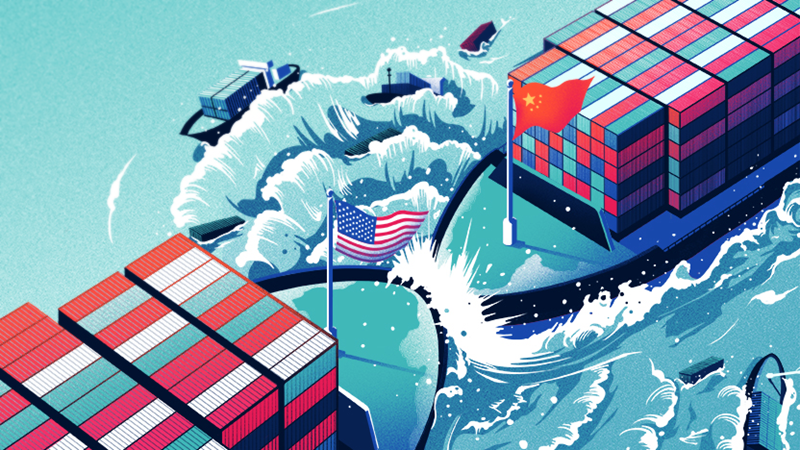
Từ thời Trump đến Biden, rồi quay lại Trump, xu hướng nâng thuế nhập khẩu, đặc biệt với Trung Quốc...
Read More







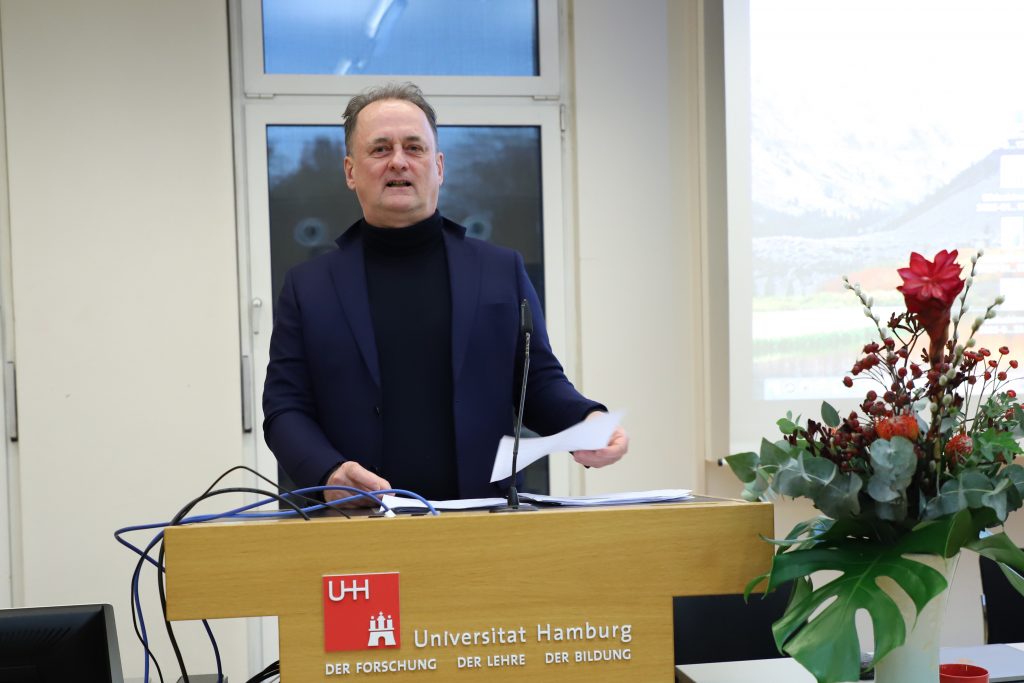
Nhân kỷ niệm 40 năm Công ước Liên hợp quốc về Luật biển (UNCLOS) ra đời (10/12/1982-10/12/2022), phóng viên đã có buổi phỏng vấn Giáo sư, Tiến sỹ Thomas Engelbert, chuyên gia nghiên cứu về biển tại Đại học Hamburg (Đức) về công ước này.
PV: Thưa Giáo sư Thomas Engelbert, ông đánh giá như thế nào về ý nghĩa và tầm quan trọng của của UNCLOS 1982 đối với an ninh hàng hải khu vực Thái Bình Dương – Ấn Độ Dương?
Công ước LHQ về luật biển được kí vào năm 1982 có ý nghĩa rất lớn đối với an ninh hàng hải, không chỉ ở Thái Bình Dương và Ấn Độ Dương mà trên cả thế giới. Đây là lần đầu tiên những qui định rõ ràng về các hành xử trên biển được đặt ra. Ví dụ công ước quy định rõ những thực thể nào được gọi là đảo, thực thể nào không phải là đảo; phân biệt đảo đá là gì và tính pháp lí của chúng khác đảo thường như thế nào; định nghĩa các vùng khai thác kinh tế trên biển của quốc gia là gì… Đây là lần đầu tiên các khái niệm này được định nghĩa rõ ràng. Văn bản này cũng quy định các cơ chế pháp lý giải quyết các tranh chấp biên giới trên biển giữa các quốc gia mà không sử dụng bạo lực. Sự ra đời của UNCLOS là một cột mốc quan trọng trong luật quốc tế liên quan đến biển. Trên cơ sở UNCLOS, một số tổ chức quan trọng được thành lập như Tòa án quốc tế về Luật Biển (tại thành phố Hamburg – Đức) hay Tòa Trọng tài thường trực PCA (tại thành phố La hay – Hà Lan). Đây là cơ sở để các quốc gia có biển giải quyết các tranh chấp lãnh thổ một cách hoàn bình.
PV: Được coi là khuôn khổ toàn diện điều chỉnh tất cả các hoạt động trên biển và đại dương, góp phần vào việc bảo đảm an ninh, tự do hàng hải, duy trì hoà bình, ổn định và thực hiện Chương trình nghị sự 2030 vì sự phát triển bền vững của Liên hợp quốc, theo Giáo sư, UNCLOS đã được áp dụng như thế trong giải quyết các tranh chấp về biển trên thế giới nói chung và tranh chấp ở Biển Đông nói riêng?
Từ khi UNCLOS ra đời, công ước này đã được áp dụng để giải quyết thành công nhiều vụ tranh chấp phức tạp về biển trên thế giới, ví dụ vụ tranh chấp giữa Anh và Mauritius trong việc thành lập khu bảo tồn biển tại khu vực quần đảo Chagos ở Ấn Độ Dương; vụ Nicaragua kiện Colombia ra Tòa án Công lý Quốc tế về phân định chủ quyền các đảo và vùng biển liên quan tại biển Caribe; vụ Timor Leste kiện Australia liên quan đến phân định biên giới biển giữa hai nước…

Đối với tranh chấp trên Biển Đông, tháng 1/2013, Philippines đã chính thức kiện Trung Quốc theo Phụ lục VII của UNCLOS. Như vậy, một lần nữa UNCLOS đã được vận dụng để giải quyết tranh chấp về biển giữa các quốc gia. Tháng 7/2016, Tòa trọng tài thường trực PCA đã ra phán quyết cuối cùng về vụ kiện này, bác bỏ hoàn toàn yêu sách “đường chín đoạn” của Trung Quốc tại Biển Đông. Quyết định này có ảnh hưởng lâu dài về mặt pháp lí. Theo phán quyết, thứ nhất, yêu sách “đường chín đoạn” của Trung Quốc không phù hợp với luật quốc tế, không dựa trên bất cứ nền tảng luật pháp nào. Thứ hai, các cấu trúc địa lý trên Biển Đông không phải là các đảo, vì thế chúng không có vùng đặc quyền kinh tế 200 hải lí như đảo thông thường. Thứ ba, việc xây dựng căn cứ trên biển, trên cáo đảo đá hay các đảo nhân tạo mà Trung Quốc đã và đang tiến hành gây tổn hại tới môi trường biển và vi phạm UNCLOS. Phán quyết này của Tòa trọng tài thường trực là cơ sở pháp lý vững chắc để giải quyết xung đột trên biển Đông. Tất nhiên việc thực hiện phán quyết phụ thuộc vào các quốc gia liên quan vì không có cơ chế cưỡng chế hiệu quả nào buộc thi hành phán quyết. Trung Quốc vẫn luôn bác bỏ phán quyết và tuyên bố sẽ không chấp nhận bất kỳ hành động nào dựa trên phán quyết này. Tuy nhiên, trong các cuộc đàm phán sau này như đàm phán về bộ quy tắc ứng xử trên Biển Đông (COC), phán quyết của Tòa trọng tài PCA vẫn có những ảnh hưởng nhất định. Các nước ASEAN không còn chấp nhận những đòi hỏi chủ quyền vô lý từ Trung Quốc nữa.
PV: Thưa Giáo sư, năm 2022 cũng là năm kỷ niệm 20 năm ký kết Tuyên bố về cách ứng xử của các bên ở Biển Đông (DOC). Ông đánh giá thế nào về ý nghĩa, vai trò của DOC trong việc duy trì môi trường hòa bình, ổn định ở Biển Đông?
Trong bối cảnh Bộ quy tắc ứng xử trên Biển Đông COC chưa ra đời, tôi cho rằng DOC có ý nghĩa lớn, là cơ sở pháp lý quan trọng ràng buộc nhất giữa ASEAN và Trung Quốc trong việc giải quyết tranh chấp trên Biển Đông, duy trì môi trường hòa bình, ổn định trong khu vực này. Các bên tham gia ký kết DOC nhất trí tuân theo các tiêu chuẩn quốc tế về cách hành xử trên Biển Đông, tôn trọng tự do hàng hải, không sử dụng hoặc đe dọa sử dụng vũ lực đối với các quốc gia khác, không leo thang căng thẳng làm phức tạp tình hình, sẵn sàng đối thoại để xây dựng Bộ quy tắc ứng xử chung COC. Hiện tại, COC vẫn trong quá trình đàm phán vì các bên vẫn chưa đạt được quan điểm thống nhất về bộ quy tắc này. Nhưng ý nghĩa nằm ở chỗ đàm phán còn tồn tại, tức là Trung Quốc buộc phải ngồi lại cùng các quốc gia ASEAN để xây dựng một cơ chế chung tránh xung đột.
Mặc dù vậy, thời gian qua Trung Quốc vẫn tiếp tục có các hành động leo thang ở Biển Đông khiến tình hình thêm phức tạp. Vì thế, vấn đề đặt ra là liệu có thể tạo ra áp lực đủ lớn với Trung Quốc trong cuộc đàm phán này hay không? Nếu các quốc gia ASEAN đoàn kết trước những quan điểm và bước đi đơn phương của Trung Quốc, điều này là có thể. Trung Quốc luôn muốn đàm phán với từng quốc gia riêng lẻ về biên giới lãnh thổ, vì các quốc gia Đông Nam Á luôn ở vị thế yếu so với sức mạnh của Trung Quốc. Khi buộc được Trung Quốc phải tham gia vào quá trình đàm phán đa phương thì đó là một thành công của ASEAN, với vai trò một “mỏ neo” giữ vững sự ổn định trong khu vực Đông Nam Á.
PV: Thưa Giáo sư, nhóm Bạn bè của UNCLOS (UNCLOS Friends Group) được thành lập theo sáng kiến của Đức và Việt Nam, tới nay đã có sự tham gia của 115 nước. Ông đánh giá như thế nào về vai trò của nhóm này trong thực thi UNCLOS, DOC cũng như thúc đẩy đàm phán về Bộ quy tắc về cách ứng xử của các bên ở Biển Đông (COC)?
Theo tôi, những sáng kiến và cơ chế hợp tác như nhóm Bạn bè của UNCLOS rất có ý nghĩa và cần thiết trong việc thực thi UNCLOS. Con số 115 quốc gia tham gia nhóm cho tới nay cho thấy điều này. Rõ ràng, các quốc gia đánh giá cao sáng kiến và sẵn sàng tham gia vào nhóm. Về phía Đức, chính phủ Đức luôn nhấn mạnh vai trò của UNCLOS và luật pháp quốc tế nói chung trong giải quyết hòa bình các tranh chấp quốc tế. Tất cả các quốc gia khác ven biển Đông cũng đều chủ trương giải quyết hòa bình các tranh chấp trên biển. Những điều này góp phần gây áp lực nhất định với Trung Quốc, khiến họ phải đàm phán, ví dụ như trong khuôn khổ COC, vì họ luôn coi mình là một cường quốc thiện chí muốn tránh các xung đột quân sự, giải quyết hòa bình tranh chấp với các quốc gia khác.
Xin trân trọng cảm ơn Giáo sư./.
BND

Views: 0


Ngày 18/11, Viện Á-Phi thuộc Đại học Hamburg (Đức) đã tổ chức hội thảo quốc tế về các chiến lược Ấn Độ Dương – Thái Bình Dương và vấn đề Biển Đông. Hội thảo cho thấy, những tranh chấp trên Biển Đông tiếp tục thu hút được sự quan tâm lớn của giới chuyên gia và dư luận quốc tế.
Với chủ đề “Các chiến lược Ấn Độ Dương – Thái Bình Dương và Biển Đông – Quan điểm từ các khu vực”, hội thảo đã thu hút được sự tham gia của nhiều chuyên gia, nhà nghiên cứu từ nhiều quốc gia trên thế giới như Đức, Pháp, Australia, Nhật Bản. Các chuyên gia đã phân tích và đưa ra nhiều nhận định, đánh giá về tình hình chính trị, an ninh khu vực Ấn Độ Dương – Thái Bình Dương, trong đó trọng tâm là khu vực Biển Đông; đồng thời đề xuất nhiều giải pháp giải quyết xung đột trong khu vực. Giáo sư, Tiến sỹ Thomas Engelbert – chuyên gia nghiên cứu về Biển Đông tại Đại học Hamburg và Tiến sỹ Gerhard Will, nguyên chuyên gia nghiên cứu về Biển Đông tại Viện Khoa học và Chính trị Đức (SWP), đồng chủ trì hội thảo.
Phát biểu khai mạc hội thảo, Giáo sư, Tiến sĩ Eve Wilden – Viện trưởng Viện Á-Phi, Đại học Hamburg, đánh giá khu vực Ấn Độ Dương – Thái Bình Dương chiếm hơn một nửa dân số thế giới, có nguồn tài nguyên thiên nhiên phong phú và nhiều tuyến đường biển quan trọng, có ý nghĩa hết sức to lớn đối với nền thương mại toàn cầu và ngày càng trở thành khu vực quan trọng trong việc định hình trật tự thế giới thế kỷ XXI. Nhận thức được tầm quan trọng của khu vực Ấn Độ Dương – Thái Bình Dương, những năm qua nhiều cường quốc trên thế giới, trong đó có Liên minh châu Âu và nước Đức, đã ban hành các chiến lược Ấn Độ Dương – Thái Bình Dương của riêng mình, đồng thời tăng cường hợp tác và hiện diện trong khu vực. Tuy nhiên những xung đột và tranh chấp dai dẳng, đặc biệt là tranh chấp trên Biển Đông, tiềm ẩn nhiều nguy cơ gây bất ổn và không dễ giải quyết. Với sự tham gia của các chuyên gia nghiên cứu hàng đầu thế giới, hội thảo sẽ thảo luận và đề xuất các biện pháp góp phần giải quyết xung đột, bảo vệ an ninh, hòa bình và ổn định trong khu vực.
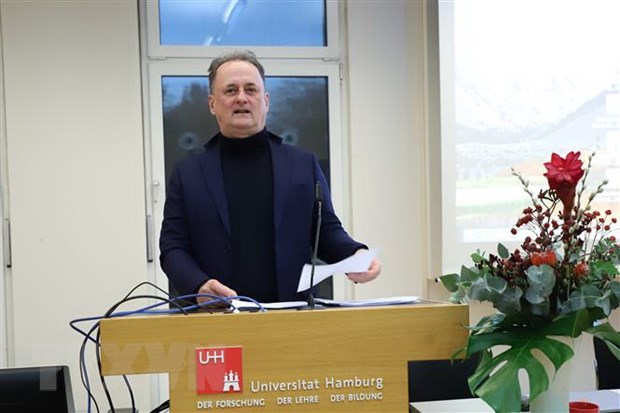
Trong bài phát biểu của mình, Giáo sư, Tiến sỹ Thomas Engelbert nhận định các chiến lược Ấn Độ Dương – Thái Bình Dương đều cho thấy quan điểm, tầm nhìn và các chính sách lớn của các quốc gia đối với khu vực Ấn Độ Dương – Thái Bình Dương – một khu vực phát triển rất năng động những cũng chứa đựng không ít mâu thuẫn, tranh chấp. Riêng tại khu vực Biển Đông, thời gian qua tình hình tiếp tục có nhiều phức tạp. Những hành vi vi phạm luật pháp quốc tế của Trung Quốc vẫn tiếp diễn, quá trình quân sự hóa Biển Đông được đẩy nhanh hơn, nguy cơ đụng độ quân sự trực tiếp trên biển luôn tiềm ẩn. Trong khi đó, quá trình đàm phán Bộ quy tắc ứng xử trên Biển Đông (COC) giữa Hiệp hội các quốc gia Đông Nam Á (ASEAN) và Trung Quốc tiếp tục kéo dài và chưa có đột phá, quan điểm của các bên tham gia đàm phán COC còn khác xa nhau, lòng tin chiến lược giữa các bên chưa được thúc đẩy.
Trong bối cảnh thế giới đang phải đối mặt với những thách thức chính trị, an ninh gay gắt như hiện nay, Giáo sư, Tiến sỹ Thomas Engelbert cho rằng các quốc gia trong khu vực Biển Đông cần kiềm chế các hành động của mình, tôn trọng luật pháp quốc tế, nỗ lực cùng nhau giải quyết xung đột thông qua các biện pháp hòa bình trên cơ sở luật pháp quốc tế, đặc biệt là Công ước Liên hợp quốc về Luật Biển 1982 (UNCLOS), đẩy nhanh quá trình đàm phán COC.
Các chuyên gia tham dự hội thảo đều khẳng định UNCLOS và phán quyết năm 2016 của Tòa trọng tài PCA là những cơ sở pháp lý vững chắc nhất và quan trọng nhất cho việc giải quyết tranh chấp trên Biển Đông. Các hành vi đơn phương vi phạm luật pháp quốc tế, gây hấn, sử dụng vũ lực hoặc đe dọa sử dụng vũ lực với các quốc gia khác là không thể chấp nhận được. Chỉ có tích cực đàm phán trên cơ sở luật pháp quốc tế và sự tôn trọng lẫn nhau, tính đến lợi ích hài hòa giữa các bên, đồng thời thúc đẩy niềm tin và tăng cường hợp tác hướng tới tương lai lâu dài, mới là biện pháp tối ưu nhất trong giải quyết xung đột, bảo vệ hòa bình, an ninh và ổn định trong khu vực cũng như trên thế giới.
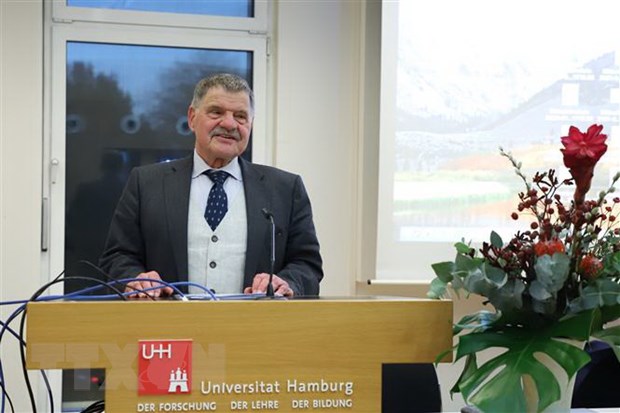
Phát biểu kết luận hội thảo, Tiến sỹ Gerhard Will đánh giá những diễn biến thời gian qua cho thấy các cấu trúc quốc tế, đặc biệt là trong lĩnh vực chính trị và an ninh, đang thay đổi nhanh chóng. Các cấu trúc cũ đang mất đi ý nghĩa và vai trò trước đây của chúng, trong khi các cấu trúc mới đang dần hình thành. Khu vực Ấn Độ Dương – Thái Bình Dương ngày càng thể hiện tầm quan trọng và được cả thế giới quan tâm nhiều hơn, một loạt các chiến lược Ấn Độ Dương – Thái Bình Dương lần lượt được ban hành trong những năm gần đây cho thấy rõ điều đó. Trong khu vực này, một trong những xung đột trọng tâm là tranh chấp trên Biển Đông. Việc tôn trọng luật pháp quốc tế, nỗ lực giải quyết hòa bình các tranh chấp này không chỉ có ý nghĩa đối với khu vực mà còn với cả thế giới./.
BND
Views: 0

Nhận lời mời của Thủ tướng Chính phủ Phạm Minh Chính, Thủ tướng Cộng hòa Liên bang Đức Olaf Scholz thăm chính thức Việt Nam từ 13 – 14/11/2022. Chiều 13/11, sau lễ đón chính thức, Thủ tướng Chính phủ Phạm Minh Chính đã hội đàm với Thủ tướng Olaf Scholz.
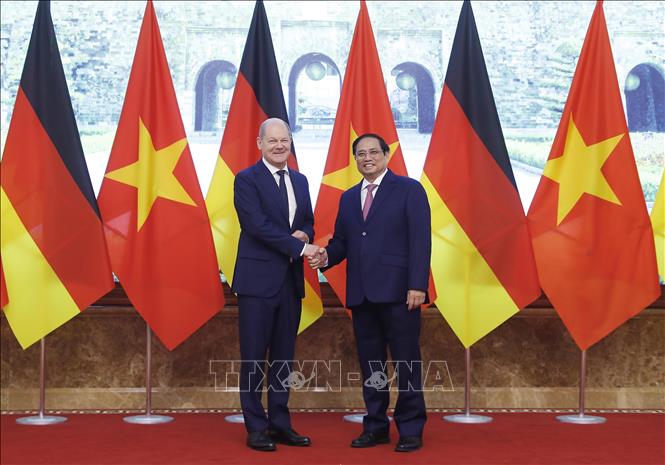
Tại cuộc hội đàm, Thủ tướng Chính phủ Phạm Minh Chính đánh giá chuyến thăm của Thủ tướng Olaf Scholz có ý nghĩa rất quan trọng, đưa quan hệ hai nước sang giai đoạn phát triển mới, đẩy mạnh tin cậy chính trị, thúc đẩy khuôn khổ Đối tác chiến lược đi vào chiều sâu, hiệu quả, tăng cường hợp tác hai nước cả bình diện song phương và đa phương hướng đến phát triển bền vững và cùng giải quyết các vấn đề toàn cầu.
Thủ tướng Olaf Scholz chân thành cảm ơn Thủ tướng Chính phủ và nhân dân Việt Nam đã dành cho Đoàn đại biểu cấp cao Đức sự đón tiếp chân tình và nồng hậu; khẳng định coi trọng vị thế và vai trò của Việt Nam trong chiến lược của Đức đối với khu vực Ấn Độ Dương – Thái Bình Dương; ủng hộ thúc đẩy mạnh mẽ quan hệ truyền thống và hợp tác chặt chẽ giữa hai nước.
Trong không khí tin cậy và thẳng thắn, hai Thủ tướng đã trao đổi toàn diện về tình hình phát triển kinh tế – xã hội mỗi nước, quan hệ hợp tác song phương và các vấn đề khu vực, quốc tế cùng quan tâm.
Hai Thủ tướng bày tỏ vui mừng về những phát triển tích cực trong quan hệ hai nước mặc dù tác động của đại dịch: Lãnh đạo cấp cao hai nước duy trì tiếp xúc thường xuyên, đầu tư – thương mại tăng trưởng mạnh mẽ, Việt Nam đã trở thành đối tác thương mại lớn nhất của Đức ở Đông Nam Á… Ngay trước và trong thời gian chuyến thăm của Thủ tướng Đức, các cơ quan hai bên đã ký 3 văn kiện hợp tác về quốc phòng, chuyển đổi năng lượng và lao động, đào tạo nghề, cho thấy quyết tâm mạnh mẽ của cả hai nước mở rộng và làm sâu sắc khuôn khổ Đối tác chiến lược.
Nhân dịp này, hai nhà Lãnh đạo đánh giá cao hợp tác hai bên trong phòng, chống dịch COVID-19. Thủ tướng Chính phủ Phạm Minh Chính cảm ơn Chính phủ và nhân dân Đức đã hỗ trợ vaccine phòng COVID-19, góp phần giúp Việt Nam đẩy lùi dịch bệnh và sớm mở cửa, phục hồi kinh tế. Thủ tướng Đức bày tỏ ấn tượng về sự phục hồi và phát triển kinh tế năng động, tích cực của Việt Nam.
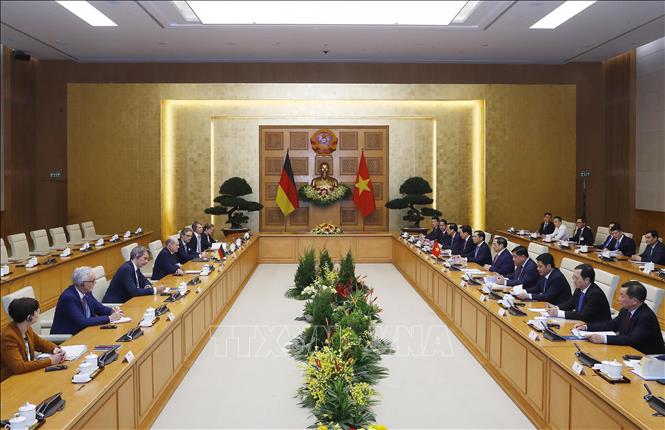
Hai Thủ tướng đã thống nhất các phương hướng, biện pháp lớn để đẩy mạnh toàn diện hợp tác giữa hai nước. Hai bên đã nhất trí tăng cường trao đổi đoàn các cấp, nhất là cấp cao, trên tất cả các kênh Đảng, Nhà nước, Chính phủ, Quốc hội, tiếp tục triển khai hiệu quả các cơ chế hợp tác song phương. Về kinh tế – thương mại, hai nhà Lãnh đạo khuyến khích các cơ quan, doanh nghiệp hai nước tiếp tục triển khai đầy đủ, hiệu quả Hiệp định Thương mại tự do Việt Nam – EU (EVFTA).
Thủ tướng Chính phủ Phạm Minh Chính đề nghị Quốc hội Đức sớm hoàn tất phê chuẩn Hiệp định Bảo hộ Đầu tư Việt Nam – EU (EVIPA); khuyến khích các doanh nghiệp Đức đầu tư mới và mở rộng đầu tư tại Việt Nam, nhất là trong các lĩnh vực Đức có thế mạnh như chuyển đổi số, năng lượng tái tạo, cơ sở hạ tầng chiến lược; thúc đẩy Ủy ban châu Âu (EC) sớm gỡ bỏ “thẻ vàng” đối với thủy sản Việt Nam; tạo thuận lợi cho xuất khẩu nông thủy sản của Việt Nam vào thị trường Đức.
Về phần mình, Thủ tướng Olaf Scholz khẳng định Hiệp định EVFTA là động lực quan trọng thúc đẩy quan hệ kinh tế – thương mại giữa hai bên; đề nghị hai nước tiếp tục đa dạng hóa quan hệ kinh tế; chia sẻ mong muốn sớm thông qua Hiệp định EVIPA; đánh giá cao nỗ lực của Việt Nam chuyển đổi nghề cá bền vững. Thủ tướng Đức nhấn mạnh các tập đoàn, doanh nghiệp Đức ngày càng quan tâm đến Việt Nam với chính trị ổn định, môi trường đầu tư – kinh doanh thuận lợi, đặc biệt trong các lĩnh vực năng lượng tái tạo, công nghiệp chế tạo, phát triển cơ sở hạ tầng…
Hai bên nhất trí mở rộng hợp tác giữa hai nước trong các lĩnh vực quan trọng khác như khoa học – công nghệ, quốc phòng – an ninh, y tế – giáo dục, đào tạo nghề và lao động, cũng như đẩy mạnh phối hợp cùng giải quyết các thách thức toàn cầu như an ninh lương thực, ứng phó với biến đổi khí hậu, trong đó thúc đẩy hợp tác về phát triển năng lượng tái tạo, hỗ trợ các vùng bị ảnh hưởng bởi biến đổi khí hậu như Đồng bằng sông Cửu Long; phối hợp với G7 để các bên sớm nhất trí về Tuyên bố chính trị về Cơ chế đối tác chuyển đổi năng lượng công bằng (JETP) trên cơ sở bảo đảm hài hòa lợi ích.
Thủ tướng Chính phủ Phạm Minh Chính đề nghị Chính phủ Đức tiếp tục hỗ trợ, tạo điều kiện thuận lợi cho cộng đồng người Việt Nam tại Đức hội nhập thành công và đóng góp cho phát triển kinh tế – xã hội Đức cũng như quan hệ hai nước, coi đây là tài sản quý báu trong quan hệ hai nước.
Hai Thủ tướng cũng đã trao đổi sâu rộng về các vấn đề khu vực, quốc tế cùng quan tâm, khẳng định hai nước tiếp tục phối hợp chặt chẽ và ủng hộ lẫn nhau tại các diễn đàn và tổ chức quốc tế, nhất là thúc đẩy quan hệ giữa ASEAN với Đức và EU cũng như hợp tác trong khuôn khổ ASEM, Liên hợp quốc…; tái khẳng định tầm quan trọng của việc đảm bảo hòa bình, ổn định, an ninh, an toàn và tự do hàng hải, hàng không ở Biển Đông, giải quyết tranh chấp bằng biện pháp hòa bình, phù hợp luật pháp quốc tế, Công ước của Liên hợp quốc về Luật Biển năm 1982 (UNCLOS 1982).
*Sau hội đàm, hai Thủ tướng đã có cuộc gặp gỡ báo chí chung, thông báo kết quả chính của hội đàm, nhấn mạnh hai bên nhất trí phối hợp chặt chẽ, thúc đẩy quan hệ Đối tác chiến lược ngày càng phát triển sâu rộng, hiệu quả, vì phát triển bền vững và lợi ích của hai nước, vì hòa bình, ổn định, hợp tác và phát triển ở khu vực và trên thế giới.
Views: 0
Views: 0
The 9th Ocean Dialogue, themed “Marine scientific research: Confidence building and environment sustainability”, was jointly held by the Diplomatic Academy of Vietnam (DAV), the British Embassy in Vietnam and the Konrad-Adenauer-Stiftung (KAS) – a German political foundation.
Apart from nearly 100 delegates who attended the dialogue in-person, many joined the event via teleconference. There were 17 speakers who are prestigious experts and scholars from such countries as the US, the UK, Germany, China, India, Singapore, the Philippines and Indonesia, and representatives of foreign diplomatic agencies in Vietnam.
DAV Deputy Director Dr. Nguyen Hung Son said the dialogue was intended to highlight the significance of marine scientific research in the East Sea, thus seeking opportunities to enhance cooperation between coastal nations and international partners in the work.
With four sessions, the dialogue focused on the legal framework of marine scientific research in line with the 1982 United Nations Convention on the Law of the Sea (UNCLOS), the reality of marine scientific research, and marine scientific research in disputed areas./.
Views: 0
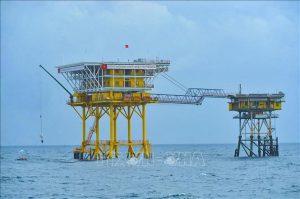
According to the article, when the UN Convention on the Law of the Sea (UNCLOS) was open for signature on December 10, 1982, Vietnam was among the first 117 countries to sign the Convention.
Furthermore, Vietnam has called upon other states in Southeast Asia to respect and comply with UNCLOS. In particular, during its chairmanship of ASEAN in 2020, Vietnam repeatedly stressed the relevance of UNCLOS in maintaining regional peace and resolving maritime disputes.
Most recently, together with Germany, Vietnam initiated the establishment of the UNCLOS Group of Friends to accelerate cooperation between like-minded countries on common maritime goals.
Mentioning the role of UNCLOS 1982, the article said known as the “Constitution of/for the oceans”, the Convention sets out a legal framework for regulating most sea-related activities and provides a platform for international cooperation on maritime-related issues. Furthermore, it stipulates binding mechanisms for settling disputes at sea.
UNCLOS standardises claims over maritime entitlements and sovereign rights of its signatories including Vietnam. Before UNCLOS, especially in the first half of the twentieth century, there were chaotic situations where countries argued over their maritime boundaries, leading to disputes. The adoption of UNCLOS has helped to reduce these kinds of disputes, as the Convention became a legal basis for the demarcation of overlapping territories.
The Convention has provided a framework for member states, including Vietnam, to cooperate with other states on various issues like crimes at sea, namely piracy and armed robbery against ships, protecting the environment, conducting scientific research, and managing resources.
The importance of UNCLOS to Vietnam has been proven over the past 40 years, especially in terms of legitimising the country’s maritime claims, enhancing its domestic law and management system, accelerating cooperation with other states, and settling maritime disputes./.
Views: 0
The Association of Southeast Asian Nations (ASEAN) should show some urgency regarding China’s latest actions in the South China Sea and hold a virtual meeting with member states to discuss this matter.
Amid the spread of the COVID-19 virus in Southeast Asia, ASEAN member states are busy battling the virus while China is actively building its presence in the occupied territories.
In March, China launched two new research stations on the Chinese-built artificial islands at Fiery Cross Reef and Subi Reef. Officials stated that they are under the Integrated Research Center for Reefs and Islands at the Chinese Academy of Sciences, and described their purpose as the study of a wide range of marine sciences, including the ecology, geology, environment, mineral, and energy resources of the South China Sea.
However, the research stations are alleged to be part of China’s plans in ramping-up its exploitation of the deep-sea environment in its search for fuel, rare metals and biotechnology in the waters, according to maritime experts.
They also said the launching of these stations is not acceptable as the 2016 Arbitral Tribunal ruling against China’s activities in the South China Sea have deemed the islands as artificial and claims by China that they are part of its exclusive economic zone are illegal.
Malaysian Waters
China has also been very active in Malaysian waters recently.
The Malaysian coast guard confirmed the presence of the Haiyang Dizhi 8, a Chinese survey ship. Vessel-tracking software also showed the ship operating close to an exploration vessel contracted by Malaysia’s state-owned oil company, PETRONAS. The survey activity was just inside Malaysia’s exclusive economic zone.
According to media reports, the Haiyang Dizhi 8 entered Malaysian waters and was seen close to the West Capella, an exploration vessel owned by Petronas. From the sinking of a Vietnamese fishing boat to the Haiyang Dizhi 8 survey vessel encroaching in claimants’ territories, Beijing is intensifying its occupation of the South China Sea.
The Haiyang Dizhi 8 survey vessel’s travels, since it left port at Sanya on Hainan Island on 9 April, shows it went through Vietnamese waters and entered the waters of Malaysia and Brunei on 17 April.
This latest flashpoint in the South China Sea is getting more attention and is seen as a new move by China. Beijing has established two districts to manage – the Spratly Islands and Paracel. Media reports claim that Beijing has moved to tighten its grip over the South China Sea by setting up new administrative structures in the disputed waters.
It was reported that the two new districts will be under the authority of the local government in Sansha, a city in the southern island of Hainan. The new districts will govern the Paracel and Macclesfield Bank – an area claimed by Vietnam and Taiwan – and the Spratly Islands and their adjacent waters, where there are multiple overlapping claims.
While China is carrying out its expansion in the South China Sea, there has been an outcry by international analysts and governments.
The United States (US) State Department released a statement on 6 April, calling on China “to remain focused on supporting international efforts to combat the global pandemic”.
US Spokeswoman, Morgan Ortagus described it as “the latest in a long string of PRC actions to assert unlawful maritime claims and disadvantage its Southeast Asian neighbours in the South China Sea.”
She said the US shares the position of the 2016 Law of the Sea tribunal decision that dismissed China’s maritime claims to the area. “We call on the PRC to remain focused on supporting international efforts to combat the global pandemic, and to stop exploiting the distraction or vulnerability of other states to expand its unlawful claims in the South China Sea.”
In an emailed statement on 18 April, the US State Department expressed its concern at reports of China’s repeated provocative actions aimed at the offshore oil and gas development of other claimant states. It said in this instance, China should cease its bullying behaviour and refrain from engaging in this type of provocative and destabilising activity.
Vietnam, the current ASEAN chair, has protested the latest moves by China. Vietnam’s Foreign Ministry spokeswoman, Le Thi Thu Hang, said that the establishment of the so-called Sansha City and related activities violated Vietnam’s sovereignty.
She said Vietnam demands that China respect Vietnam’s sovereignty and abolish its wrongful decisions.
Former Foreign Secretary of the Philippines, Albert Del Rosario urged authorities to protest China’s establishment of two districts aimed at exerting control over the South China Sea.
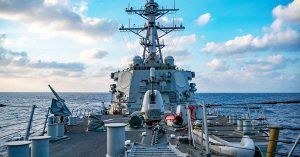
In a statement, he also accused China of exploiting the new coronavirus pandemic to advance its “illegal” claims in the waters.
Other experts have also condemned China’s activities in the South China Sea.
In a comment on Twitter, Collin Koh, a Research Fellow at the Institute of Defense and Strategic Studies (RSIS) stressed that China is taking advantage of the pandemic plight of ASEAN parties in the South China Sea to assert its claims.
He ticked-off Beijing for picking a fight with Malaysia, a country which has been consistent in prioritising broader bilateral relations over South China Sea issues. He believes China is violating Southeast Asia sovereignty and rights in the South China Sea.
Politic analyst Carl Thayer from the University of New South Wales called China’s latest action “provocative,” “illegal” and has no basis under international law.
He added that international law does not recognise sovereignty acquired through conquest. Beijing’s move also violates the Declaration on Conduct of Parties in the South China Sea (DOC) that was agreed to by China and ASEAN member states in 2002.
Thayer pointed out that Paragraph 5 of the DOC states that the Parties undertake to exercise self-restraint in the conduct of activities that would complicate or escalate disputes and affect peace and stability in the South China Sea.
He also said China’s unilateral actions seriously complicate the dispute and affects peace and stability in the region.
He warned that China’s declaration of a new administrative district in the Spratly Islands “is a pre-emptive move to push aside sovereignty claims by Vietnam and the Philippines.”
Why Does ASEAN Have To React?
While Chinese actions defy international and sea laws guiding the exclusive economic zones of every country in the South China Sea, ASEAN must act to prevent the colonisation of the seas by China.
In order to prevent such an escalation, ASEAN member states who are claimants in the South China Sea should call for an urgent meeting and step up efforts to deal with the unfolding situation.
All 10 ASEAN member states should play a central role in resolving conflicts and de-escalating tensions. ASEAN has to be united when addressing regional issues.
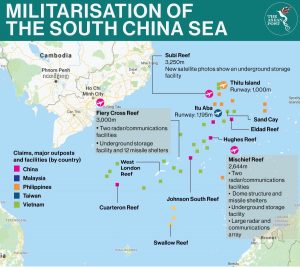
Internationally, the US, India, Japan and Australia also realise the need to contain Beijing’s activities and the importance of strengthening ASEAN.
India and the US have understood the need for the Quad as was made clear in a joint statement in February 2020 by Modi and Trump. They also stressed that the code of conduct (COC) should “not prejudice the legitimate rights and interests of all nations according to international law” and that ASEAN’s centrality in the Indo-Pacific should be maintained.
In an environment of escalating conflict in the South China Sea, the regional bloc should call on stakeholders to practice restraint, avoid the most stressful escalation and comply with international law, especially the United Nations Convention for the Law of the Sea (UNCLOS) and the DOC.
ASEAN member states should find ways to solve this standoff. One way is for ASEAN and Chinese officials to speed up the process of finalising the COC for the South China Sea, which experts say will ensure the code is “legally binding, meaningful, effective, and consistent with international law”. /.
Maria Angela, The Asean Post
Views: 0
Germany is set to expand its military presence in the Indo-Pacific region. The move to expand comes amidst increasing concern over China’s territorial ambitions in the contested region.
Speaking with Reuters, German defense minister Eberhard Zorn said the country plans to expand its military presence in the Indo-Pacific region, where tensions are rife over the contested South China Sea and the island nation of Taiwan.
Zorn said Germany would send more warships and participate in drills with allies as it keeps tabs on China’s ambitions.
In 2021, Berlin deployed the first warship in 20 years to the region, and this month, it sent military aircraft to participate in joint military exercises with Australia. Zorn said the Bundeswehr planned to send troops to take part in Australia’s exercises next year as the German navy would send more ships in 2024.
“This is how we consolidate our presence in the region,” said Zorn.
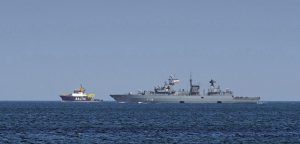
Germany unveiled its Indo-Pacific strategy back in 2020, focusing on strengthening ties with democracies in the region, marking a turning point from its usual security policy. In February this year, German Chancellor Olaf Scholz pledged an increase in military spending in light of Russia’s invasion of Ukraine.
Zorn was also pressed on whether Germany would send a warship through the Taiwan Strait like the United States. Zorn said it was a sensitive matter that is decided by the highest levels, stressing that Germany plans to show solidarity with its allies.
“We do not want to provoke anyone with our presence but rather send a strong sign of solidarity with our allies. We stand for the freedom of navigation and the safeguarding of international norms,” said Zorn.
In a report to the Taiwanese parliament this week, the island’s defense ministry found that the Chinese navy has been simulating attacks on US Navy ships and is looking to prevent foreign forces from coming to Taiwan’s defense in the event of an invasion.
The ministry added that China was strengthening its combat preparedness for a potential attack on Taiwan.
In the report, China focused on the first island chain, that runs from Japan to Taiwan, the Philippines, and Borneo. The ministry added that China was stepping up its military intimidation including drills that seek to undermine Taiwan’s morale and “force negotiations with a war” and forcibly “reunify” the island and China./. (econotimes.com)
Views: 0
The Finance Ministry said on September 6 that Moody’s Investors Service has upgraded Vietnam’s long-term issuer and senior unsecured ratings to Ba2 from Ba3 and changed the outlook to stable from positive.
The ministry said the upgrade to Ba2 reflects the assessment by Moody’s that Vietnam’s economy has growing strengths and greater resilience to external macroeconomic shocks that are indicative of improved policy effectiveness.
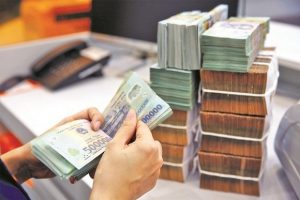
Moody’s expects the situation would continue as the economy benefits from supply chain reconfiguration, export diversification and continued inbound investment in manufacturing.
The rating also reflects a sounder fiscal footing backed by contained borrowing costs, a conservative approach to fiscal policy and improved government liquidity, driven by the ongoing transition from external concessional borrowing toward longer-dated, low-cost domestic market financing, said the ministry.
Amid complicated developments in the world in the past eight months, Vietnam is the only in Asia-Pacific and one of the four countries globally to have ratings upgraded by Moody’s since early this year.
Despite the changes in the world situation, Vietnam has made positive recovery in business and production activities, stabilised macro-economy, controlled inflation, and ensured major economic balances, according to a report by the Ministry of Planning and Investment (MPI) delivered at the Government regular meeting on September 6.
In August, consumer price index (CPI) rose 3.65 year on year, pushing the average CPI in the first eight months to 2.58%, equivalent to the level recorded in the 2018-2021 period, said the report.
Budget collection in the first eight months of this year fulfilled about 84.8% of the yearly estimate, up 19.4% year on year, while import-export turnover rose about 17.3% over the same period last year in August and 15.5% in the first eight months of this year, with trade surplus reaching 3.96 billion USD in the eight months.
At the same time, the index of industrial production (IIP) increased 15.6% year on year in August and 9.4% in eight months, according to the report. Total revenue from retail of goods and services in August was also up 50.2% year on year.
Particularly, important infrastructure such as Van Don-Mong Cai and Ha Long-Mong Cai Expressways and Thu Thiem 2 Bridge were put into operation.
The report also highlights positive results in many areas such as defence, security and external relations.
It said that as of August 28, 505 trillion VND (21.44 billion USD) of public investment capital was disbursed, reaching 93.2% of the target.Meanwhile, the Ministry of Finance reported that over 212 trillion VND of capital from the State budget had been disbursed as of August 31, equivalent to 39.15% of the plan set by the PM.
As of September 2, 55.5 trillion VND of support to the socio-economic recovery and development programme was disbursed, including more than 10 trillion VND of soft loans through the Vietnam Bank for Social Policies.
The implementation of national target programmes has also been on a right track, the ministry said.
Governor of the State Bank of Vietnam Nguyen Thi Hong said that in August and the first eight months, the inflation rate was kept at a low level, while economic growth was relatively high, showing the efficiency of macro-economic policies.
Minister of Planning and Investment Nguyen Chi Dung said that many reputable organisations and experts are optimism about Vietnamese economic outlook, noting that the World Bank predicted 7.5% of Vietnam’s GDP growth for 2022 and 6.7% for 2023, while the Asian Development Bank and the International Monetary Fund also forecast that the figure may reach 6.5% and 6%, respectively, for this year./. VNA
Views: 0
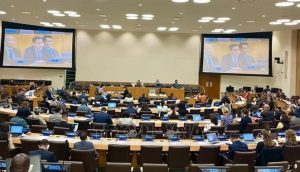
Vietnam has affirmed the necessity for maintaining peace, security, and freedom of navigation and overflight in the East Sea while attending the 32nd Meeting of States Parties to the 1982 UN Convention on the Law of the Sea (UNCLOS).
The meeting, taking place at the UN headquarters in New York from June 13 to 17, looked into reports by the agencies set up under UNCLOS such as the International Tribunal for the Law of the Sea, the Commission on the Limits of the Continental Shelf (CLCS) and the International Seabed Authority, along with procedural, budgetary, and personnel affairs of these bodies. It also elected CLCS members.
Ambassador Dang Hoang Giang, Permanent Representative of Vietnam to the UN, reaffirmed that UNCLOS, as the “constitution of the oceans”, is the legal framework for all activities in the oceans and seas and also the only legal foundation for comprehensively and fully identifying the scope of countries’ rights to sea areas.
With regard to the East Sea issue, he held that peace and development of the region and international community are connected with the maintenance of peace, security, and freedom of navigation and overflight in the waters.
Stressing the importance of fully and comprehensively implementing the Declaration on the Conduct of Parties in the East Sea (DOC), Giang appealed for all disputes to be resolved by peaceful means, on the basis of international law, including the UN Charter and UNCLOS, with respect for diplomatic and legal processes, and without use of force or threat to use force.
He also informed about the progress of the negotiation on a code of conduct (COC) in the East Sea.
The diplomat shared the view on the sea-related challenges pointed out in the UN Secretary-General’s report, especially the COVID-19 pandemic’s negative impacts on ocean issues, including the worsening of many existing or emerging maritime issues like marine biodiversity, migration, and climate change.
Given this, he emphasised that international cooperation on the basis of UNCLOS holds great importance to coping with these challenges.
In his remarks, Giang also highlighted Vietnam’s viewpoint that when working out solutions to challenges, it is necessary to pay due attention to capacity, technology transfer, and financial assistance for developing countries, and that Vietnam supports the UN’s initiatives on promoting the use of science and techniques to use the oceans sustainably.
At the June 16 discussion on the UN Secretary-General’s report on issues related to the seas and oceans, UN agencies’ activities, and international cooperation last year, participants underlined the request for adhering to UNCLOS, enhancing regional and international cooperation in sea and ocean-related issues, responding to such challenges as marine pollution and climate change, and contributing to the realisation of Sustainable Development Goal 14 on conserving and sustainably using the oceans, seas and marine resources.
Taking effect on November 16, 1994, UNCLOS has been ratified by 168 states and international organisations. Fourteen other states have signed but yet to ratify the convention./.
Views: 0
Views: 0
Views: 0
Views: 0
Views: 0
Unlike China, Vietnam has largely overcome the pandemic and wants to continue building on its economic success story from recent years. Can Hanoi sustain long-term growth?
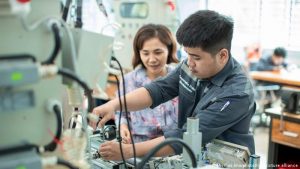
Vietnam’s adherence to an open economy makes it ‘indispensable from a European perspective’
Vietnam was one of the few countries whose economy grew during the coronavirus pandemic in 2020. Many say this was due to early and rigorous action by the government and a zero-COVID strategy that kept case numbers low for a long time.
However, in summer 2021, before the omicron variant changed how countries approached pandemic policy, the delta variant’s spread in Vietnam began to spiral out of control.
As infection rates climbed, factories from international companies like Samsung, Apple, Nike and Zara were forced to close for weeks.
Workers returned to their home villages in chaotic conditions. According to the World Bank, Vietnam’s annual economic growth fell to 2.58%.
Vietnam decided to change its strategy and pushed ahead with a vaccination campaign, which had previously been neglected. Hanoi took a pragmatic approach and, unlike China, also used Western vaccines.
“Vietnam got its act together relatively quickly, and that shows the adaptive capacity of the Vietnamese system,” Daniel Müller, manager at the German Asia-Pacific Business Association, told DW.
Meanwhile, almost all coronavirus restrictions have been lifted in Vietnam.
The risk of further lockdowns is low, said Dang Duc Anh, director of Vietnam’s National Institute of Hygiene and Epidemiology, according to Reuters news agency. The Asian Development Bank forecasts Vietnam’s economy to grow 6.5% in 2022 and 6.7% in 2023.
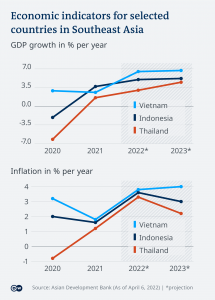
There are signs Vietnam’s economy is benefiting from its altered pandemic policy.
Many companies, especially in the electronics industry, are putting up a lot of money. South Korean electronics giant Samsung announced in February it would invest a further $920 million (€857 million) in Vietnam.
There is also a continuing trend of moving high-tech production from China to Vietnam.
Chinese electronics groups such as Luxshare Precision Industry, Goertek, and Taiwanese iPhone assembler Pegatron, are moving facilities to Vietnam, according to the German electronics trade magazine Elektronik Praxis.
“Vietnam will be one of the main beneficiaries of shifting supply chains,” Raphael Mok from the consultancy Fitch Solutions told Reuters.
Müller from the German Asia-Pacific Business Association said that Vietnam has “always been in the spotlight” of German companies.
“The real run hasn’t started yet, but that could change now because business dissatisfaction in China has now reached a level that didn’t exist before,” Müller said.
China is drawing increasing criticism with its zero-COVID policy and weeks-long lockdowns that can be set off by a relatively low number of infections.
The ongoing lockdownin the business and production metropolis of Shanghai has created global supply chain problems as factories and ports sit still.
Despite good prospects, there are also challenges for Vietnam’s economy. First, there is Vietnam’s deep integration into global supply chains, which is both a blessing and a curse.
Vietnam’s open economic policy of recent years integrating into global supply chains has made the growth success story possible in the first place.
However, the downside is that Vietnam is dependent on supplies of raw materials and component products, some of which are missing or delayed due to the pandemic.
Vietnam is also vulnerable to the increasing geopolitical tensions between the US and China.
Resilient supply chains are therefore key for Vietnam’s continued economic strength. However, the country is not yet well enough positioned in this area, according to Müller.
Digital supply chains, for example, are not yet sufficiently in focus in Vietnam, he said. Digital supply chains comprise the digital networking of all processes and steps in a supply chain to monitor them in real time and make them even more efficient.
But it is not only supply chains that need to become more resilient, but also Vietnam’s economy as a whole. Essential to this is a broader basis of value-added production, according to Müller.
“This requires further professionalization at all levels,” he said, adding that Vietnam’s education and training system, for example, needs to improve. “At the moment, it can barely keep up with the growing demand,” he said.
Resilience also means strengthening domestic consumer demand. When the wave of coronavirus infections struck in the late summer of 2021, Vietnam’s economy, which is dependent on foreign trade, was hit hard.
According to the World Bank, Vietnam’s foreign trade ratio was 209% in 2020, which indicates a high level of economic dependence. With its population of just under 100 million, Vietnam cannot aim for economic development centered on domestic demand like China.
“Initially, it can only be a matter of balancing this out to a certain extent,” said Müller.
Vietnam has recognized the problem, but it is struggling to take the necessary steps toward bolstering its consumer economy. Increased domestic demand would require larger segments of the population to benefit from economic growth. However, inequality is growing, as is the urban-rural divide, according to a March 2021 study in the trade journal Economies.
For more at www.dw.com
Author: Dr. Rodion Ebbighausen
Views: 0
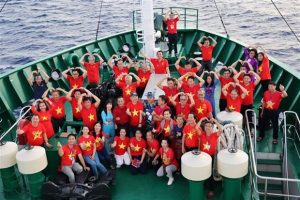
The visit, which was delayed for two years due to COVID-19, is the 10th of its kind held by the State Committee for OV Affairs under the Ministry of Foreign Affairs and the Naval High Command.
According to Ambassador Ngo Huong Nam, Vice Chairman of the State Committee for OV Affairs, the visit aims to affirm Vietnam’s sovereignty and sovereign rights over the Truong Sa (Spratly) archipelago and southern continental shelf.
This is also a chance for the OVs to meet, exchange and foster connections with their fellow Vietnamese at home, contributing to strengthening great solidarity bloc, he said.
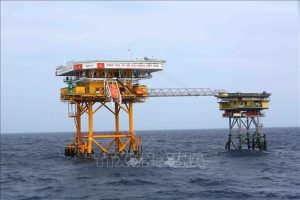
Responding to the call of the State Committee over the past 10 years, OVs have made their material and spiritual contributions to Truong Sa. During the visit, the OVs presented gifts and necessities to soldiers and people in the island district.
The visit, spanning from May 17-25, the OVs engaged in many activities, including exploring the daily life of locals in the island district, attending a flag hoisting ceremony, and offering incense to heroic martyrs and President Ho Chi Minh./. VNA
Views: 0
Views: 0
Views: 0
Views: 0
Views: 0