Mỹ nâng Tariff – Lợi & Hại?
By Le Hoang
/ 9. July 2025
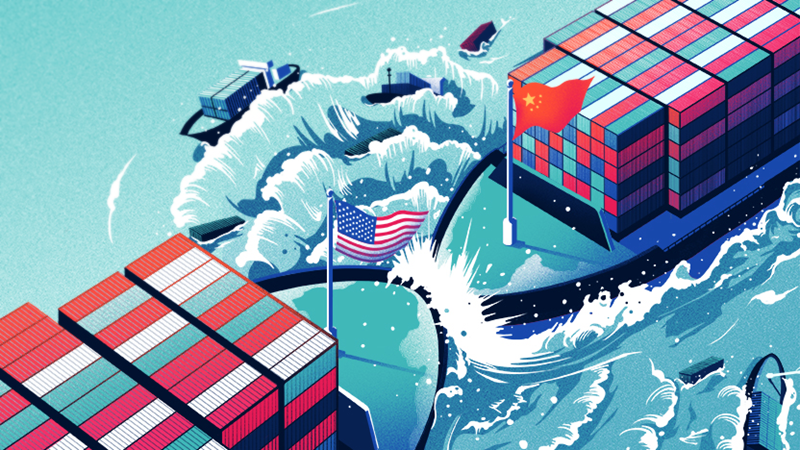
Từ thời Trump đến Biden, rồi quay lại Trump, xu hướng nâng thuế nhập khẩu, đặc biệt với Trung Quốc...
Read More






Views: 0
Views: 0
Views: 0
Views: 0
Views: 0
Views: 0
Views: 0
Views: 0
Views: 0

Trong tương lai, Hải quân Đức sẽ định kỳ hai năm một lần triển khai tàu chiến đến khu vực Ấn Độ Dương-Thái Bình Dương.
Đây là tuyên bố của Tham mưu trưởng Hải quân Đức, Phó Đô đốc Kay-Achim Schonbac.
Phóng viên TTXVN tại Berlin dẫn báo FAZ của Đức ngày 22/12 cho biết phát biểu trên của Phó Đô đốc Schonbac được đưa ra tại Singapore khi khinh hạm Bayern của Đức đang ghé thăm cảng của quốc gia Đông Nam Á này.
Trong bài phát biểu theo lời mời của Viện Nghiên cứu chiến lược quốc tế, ông Schonbac mô tả sứ mệnh hiện nay của chiến hạm Bayern như chiếc “tàu phá băng” để chuẩn bị cho các sứ mệnh trong tương lai.
Các sứ mệnh này có thể được tiến hành theo định dạng quốc tế với các đối tác hải quân châu Âu và quốc tế. Tham mưu trưởng Hải quân Đức không loại trừ khả năng Đức có thể tham gia các sứ mệnh do một cụm tàu sân bay tấn công dẫn đầu.
Hải quân Đức có kế hoạch sẽ triển khai hai tàu chiến, gồm một khinh hạm và một tàu hỗ trợ, vào năm 2023. Khinh hạm F125 Baden-Württemberg mới có thể được sử dụng cho mục đích triển khai luân chuyển trong khu vực Ấn Độ Dương-Thái Bình Dương.
Một “trung tâm hậu cần không cố định” có thể được thiết lập để hỗ trợ cho sứ mệnh này. Hiện Đức đã tiến hành đàm phán với Singapore cũng như với Nhật Bản và Hàn Quốc về các công việc liên quan. Ngoài ra, trong năm 2022, quân đội Đức cũng sẽ đưa các đơn vị không quân và an ninh mạng tới khu vực Ấn Độ Dương-Thái Bình Dương./.
Nguồn: Vietnamplus
Views: 0
Views: 0

In an interview granted to Vietnam News Agency’s correspondents in Thailand on the occasion of Vietnam’s National Conference
The current foreign policy of Vietnam is developed from the policy initiated since the country’s Doi moi (renewal) process in 1986, which overall seeks good relationships with all countries around the world and involvement in peacekeeping in Southeast Asia and world politics, he stressed.
The world has gained a clearer and more concrete view of Vietnam’s foreign policy when the Secretary-General of the Communist Party of Vietnam clearly described that Vietnam’s foreign affairs from the past till the present reflects the uniqueness of the Vietnamese identity, that is, like the nature of bamboo where strength and compromise integrally blend together, he added.
Vietnam’s success in many aspects seen by the world today is another confirmation of the best practices of the national development policy, including the current foreign policy known as bamboo foreign policy, he said.
Meanwhile, both Honorary President of the Czech-Vietnamese Friendship Association Marcel Winter and President of the Hungary – Vietnam Friendship Association Botz László, said Vietam’s foreign policy is the foundation for strengthening friendship cooperation, affirming that Vietnam’s foreign policy and contributions have helped improve Vietnam’s position and prestige in the international arena.
Taking to Vietnam News Agency’s correspondents in the Czech Republic, Winter stressed that Vietnam has achieved great diplomatic successes in the world, especially at the United Nations (UN).
According to Winter, Vietnam has always been very active as a non-permanent member of the UN Security Council. The country has been also very successful when participating in the UN peacekeeping missions in South Sudan, where Vietnamese military doctors are working effectively.
The prestige of Vietnam, especially in ASEAN, is the result of Vietnam’s very successful role as the ASEAN Chair, even in the context of the COVID-19 pandemic, he stressed.
Sharing Winter’s view, László said thanks to drastic policies, strict discipline as well as the trust of the Vietnamese people in the State, the success of the country in the fight against COVID-19 has significantly contributed to Vietnam’s rapid economic development in the context of the pandemic, thus helping improving Vietnam’s international reputation.
According to him, Vietnam’s foreign policy within the framework of ASEAN is very effective, while great strides in realising the EU-Vietnam Free Trade Agreement (EVFTA) have created a motivation for expanding trade relations between Vietnam and Hungary.
Winter suggested that specific orientations are needed to further strengthen bilateral friendship cooperation and meet the need of the business circles of both countries.
For his part, László said it is necessary to pay more attention to introducing and promoting the Vietnamese culture in Hungary. /.VNA
Views: 0

Addressing the meeting on oceans and the law of the sea, Ambassador Pham Hai Anh, Chargé d’affaires a.i. of Vietnam in the UN, said the country supports the universality, consistency, and comprehensiveness of the UNCLOS and highly values contributions by the agencies established under this convention to promoting the legal order at sea.
To further enhance the awareness and enforcement of the UNCLOS, he called on countries to continue taking part in the Group of Friends on the UNCLOS, founded by Vietnam and Germany, which now has a membership of 112.
Regarding the recent complex developments in the East Sea, the diplomat affirmed Vietnam’s consistent stance that all disputes must be resolved by peaceful means, with respect for international law, including UNCLOS, and diplomatic and legal processes, and without use of or threat to use force.
Anh appealed to all the parties concerned to exercise self-restraint; not militarise or conduct activities that may complicate the situation, increase disputes, affect the safety and security of navigation and overflight in the East Sea, or jeopardise peace and security in the region; and fully implement the Declaration on the Conduct of Parties in the East Dea (DOC) and soon finalise a substantive and efficient code of conduct (COC) that matches international law, especially UNCLOS.
At this meeting, nearly 50 nations and groups of countries highlighted the universality, consistency, and comprehensiveness of the UNCLOS, which is the international legal framework regulating all activities on seas and oceans and reflecting the principles of customary international law, and thus binding upon all countries, even those that are not a party to UNCLOS.
Many countries also talked about the basic rights of seafarers, marine plastic pollution, and challenges posed by climate change.
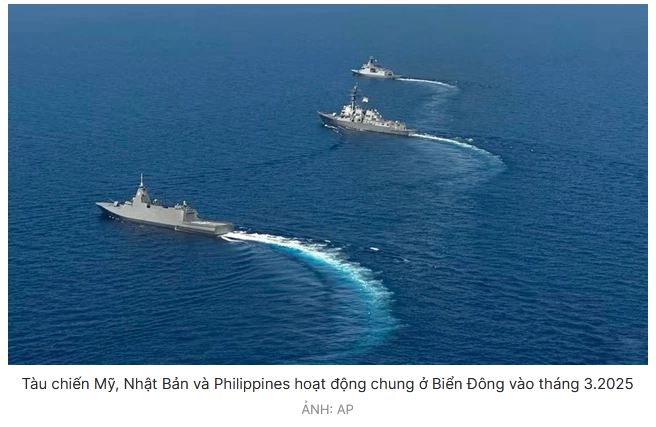
In terms of the East Sea issue, the US, Germany, Japan, Australia, and the Philippines voiced concerns over the territorial claims or sea areas that are too large and illegal in the East Sea, as well as incidents and actions impeding countries’ normal oil exploitation activities.
They underlined the demand for guaranteeing the freedom of navigation in the East Sea, and that relevant sides have the obligation to peaceful resolve international disputes in line with UNCLOS, ensure that their countries’ internal regulations and policies must accord with UNCLOS, and respect the ruling on the East Sea issue made by the Permanent Court of Arbitration, based in The Hague, in 2016./.
Views: 0

They pointed out complex developments in the East Sea and the region over the past time, which have drawn public concern.
Many said the ruling issued by the Permanent Court of Arbitration in 2016 plays an important role in narrowing disputes in East Sea, and clarifying the legal grounds for some issues in the waters such as oil and gas activities, the determination of baselines for features in the East Sea, and ensuring safety and security of navigation in the region.
Others said the battle of diplomatic notes between countries regarding the East Sea show that the majority back the use of the UNCLOS as the only and comprehensive legal basis for determining maritime claims and exercising the sovereign rights and jurisdiction of states.
The scholars emphasised factors that cause supply chain disruptions, rising costs and labour shortage; and discussed solutions to restore the sea route in the coming time.
They also stressed importance of marine science research and sea environment protection as well as the use of technologies for peaceful purposes.
Dr. Pham Lan Dung, Acting Director of the Diplomatic Academy of Vietnam, said proposals raised at the conference will contribute to improving public awareness of maintaining cooperation and peace in the East Sea in the context of the world facing difficulties caused by COVID-19 and each person striving to adapt to the new normal.
The conference, held in both online and in-person forms, brought together more than 60 scholars from 30 countries and territories, 90 representatives from diplomatic corps, and nearly 500 delegates./. VNA
Views: 0
Views: 0
Views: 0
Views: 0
Views: 0
Views: 0
Views: 0