Mỹ nâng Tariff – Lợi & Hại?
By Le Hoang
/ 9. July 2025
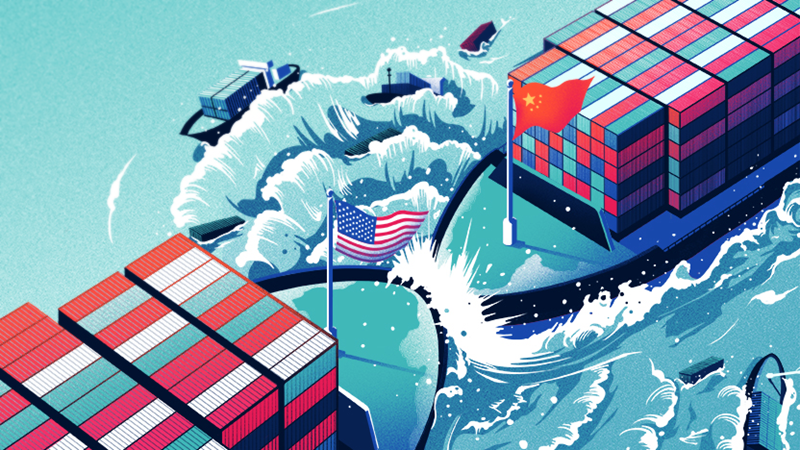
Từ thời Trump đến Biden, rồi quay lại Trump, xu hướng nâng thuế nhập khẩu, đặc biệt với Trung Quốc...
Read More






French President Emmanuel Macron, German Chancellor Angela Merkel and Dutch Prime Minister Mark Rutte attend the press conference after the meeting at the Chancellery in Berlin, Germany June 29, 2017. REUTERS/Fabrizio Bensch
Police is well-prepared to handle violence or hostile demonstrations. The Ministry of Home Affairs said it has imposed border control measures since June 12 to prevent anti-globalists, anarchists and other leftist forces. Neighboring countries and the European Council will support Germany’s security measures.

Views: 0

Foreign Ministers of Gulf Cooperation Council’s members attended a meeting in Riyadh, Saudi Arabia (Photo: AFP/ VNA)
Saudi Arabia’s Ministry of Trade and Investment said that this came on the sidelines of a meeting with the WTO Council on Trade in Goods held in Geneva, Switzerland, on the compatibility of the decisions taken by Saudi Arabia, UAE, Bahrain and Egypt with the organization’s regulations.
Speaking on behalf of all three countries, the Bahraini diplomat at the WTO’s Goods Council said the measures were “in accordance with Article XXI of the General Agreement on Tariffs and Trade”, which allows the usual rules to be broken for national security reasons. The article states that during a dispute in international relations, the obligations of the convention allows member states to take the steps they deem necessary to protect their interests and their national security./.
Views: 0
– Phát biểu sau chuyến thăm Trung Quốc (TQ) của Ngoại trưởng Philippines (PLP) Peter Cayetano, Ngoại trưởng TQ (29/6) nhấn mạnh hai nước đã thiết lập cơ chế tham vấn song phương về vấn đề Biển Đông và cơ chế về hợp tác giữa các lực lượng bảo vệ bờ biển. Ngoại trưởng PLP Cayetano cho rằng hoà bình và ổn định ở Biển Hoa Đông, Biển Đông và khu vực này là kết quả rõ ràng của việc cải thiện quan hệ gần đây với TQ.
Hội nghị Chính sách an ninh Diễn đàn khu vực ASEAN tại Manila (29/6) đã khai mạc với sự tham gia của các nước thuộc Diễn đàn khu vực ASEAN; tại hội nghị đại biểu các nước chia sẻ quan điểm và cho rằng vấn đề an ninh biển nói chung và tranh chấp ở Biển Đông nói riêng là thách thức an ninh chung tại khu vực, kêu gọi các bên liên quan giải quyết bằng biện pháp hoà bình, trên cơ sở tôn trọng luật pháp quốc tế, đặc biệt là Công ước Liên hợp quốc về Luật biển (UNCLOS) 1982, Tuyên bố về ứng xử của các bên ở Biển Đông (DOC) và Bộ Quy tắc ứng xử ở Biển Đông (COC). (Reuters).

Hội nghị Chính sách an ninh Diễn đàn khu vực ASEAN
– Phát biểu tại Trung tâm Chính sách chiến lược Australia tại Brisbane (28/6), Tư lệnh Bộ chỉ huy Thái Bình Dương Mỹ, Đô đốc Harry Harris cáo buộc TQ đang tăng cường khả năng chiến đấu và tạo lợi thế về mặt vị trí để khẳng định chủ quyền đối với những vùng lãnh thổ tranh chấp ở Biển Đông; tuyên bố Mỹ kiên quyết phản đối việc đe doạ để tạo lợi thế chủ quyền.
Tờ Straits Times (28/6) dẫn ý kiến Giáo sư Luật tại Đại học Quốc gia Australia Donald R.Rothwell vừa đưa ra đề xuất thành lập “Uỷ ban Biển Đông” gồm 15 thành viên, có khả năng xử lý các tranh chấp ở cả cấp độ song phương và khu vực với nhiệm vụ hoà giải và phân xử tranh chấp của các bên ở Biển Đông. Theo đó, mỗi bên trong nhóm tuyên bố chủ quyền ở Biển Đông sẽ bổ nhiệm một thành viên uỷ ban, trong khi 9 thành viên còn lại được bổ nhiệm từ các nước bên ngoài khu vực. Theo đề xuất của Giáo sư Rothwell, phạm vi hoạt động của Uỷ ban Biển Đông có thể mở rộng sang các tranh chấp trên đất liền và trên biển, bao gồm các đảo, đá và các thực thể biển nhở khác như bãi cạn và đá ngầm. (Tân hoa xã, China Daily)
– Trước chuyến thăm Mỹ của Thủ tướng Ấn Độ Narendra Modi (24/6), Người phát ngôn Bộ Ngoại giao TQ Cảnh Sảng (23/6) lên tiếng cảnh báo Ấn Độ không nên can dự vào vấn đề Biển Đông, cho rằng “các nước ngoài khu vực cần tôn trọng nỗ lực của các nước liên quan để duy trì hoà bình và ổn định khu vực”.
Tại Diễn đàn Hoà bình thế giới tổ chức tại Đại học Thanh Hoa (Bắc Kinh, TQ), Thứ trưởng Bộ Ngoại giao TQ Trương Nghiệp Toại (24/6) khẳng định tình hình Biển Đông đang ổn định, việc phô diễn sức mạnh không được hoan nghênh ở khu vực và TQ phản đối mạnh mẽ bất kỳ thách thức nào đối với chủ quyền của TQ ở Biển Đông.
Hải quân PLP và Việt Nam đã cùng tham gia giao lưu thể thao ở đảo Song Tử Tây (quần đảo Trường Sa). Đây là lần thứ ba hải quân hai nước tham gia hoạt động giao lưu thể thao kể từ năm 2014 và nằm trong chương trình hoạt động trao đổi, hợp tác giữa hải quân hai nước.

Giao lưu thể thao ở đảo Song Tử Tây giữa Hải quân PLP và Việt Nam
Một số báo dẫn bình luận của các chuyên gia về việc Nhật Bản (NB) mời quan chức quân đội 10 nước ASEAN khảo sát ở Biển Đông, cho rằng NB đang khiến các nước ASEAN nhận thức sai lệch rằng TQ là nhân tố gây bất ổn ở Biển Đông và ASEAN cần phải hợp tác với Mỹ và Nhật Bản để kìm chế TQ; NB đang thông qua hợp tác quân sự để thúc đẩy việc bán vũ khí, song việc này sẽ khiến tình hình khu vực càng trở nên bất ổn hơn. (India Times, Ibtimes, The Diplomat, Reuters, Tân hoa xã)
Views: 0
Views: 0

(Người Việt tại Châu Âu ký “Kiến nghị thư” gửi Thủ tướng Đức về vấn đề Biển Đông tại Hội nghị thượng đỉnh G20)
Trong hai ngày 29-30/6, tại thủ đô Berlin – Cộng hòa Liên bang Đức, cộng đồng người Việt tại Châu Âu đã tổ chức long trọng tổ chức lễ ký kết “Kiến nghị thư” gửi Thủ tướng Đức Angela Merkel đề nghị đưa vấn đề biển Đông vào chương trình nghị sự của Hội nghị Thượng đỉnh cấp cao G20 diễn ra trong hai ngày 7 và 8/7/2017 tại Thành phố Hamburg. Đức là Chủ tịch luân phiên của Hội nghị Thượng đỉnh G20 năm nay.
Tham gia Lễ ký kết có đại diện các hội, đoàn, doanh nghiệp người Việt tại Đức, Áo, Ba Lan, Séc … , các cơ quan truyền thông báo chí của Đài truyền hình Việt Nam, Thông tấn xã Việt Nam và các tờ báo của cộng đồng người Việt tại CHLB Đức.
Phát biểu tại buổi lễ, Gs. Tiến sỹ Nguyễn Văn Thoại – Đại diện Liên hiệp người Việt toàn Liên bang Đức nhấn mạnh, đây là hoạt động tiếp nối các hoạt động truyền thống của bà con kiều bào tại Cộng hòa liên bang Đức trong việc bảo vệ chủ quyền biển đảo, bày tỏ thái độ với những “kẻ” xâm lược. Thời gian gần đây, Trung Quốc đã có những bước quân sự hóa ngang nhiên trên Biển Đông, bất chấp sự lên án, phản đối mạnh mẽ của cộng đồng quốc tế, gây mất an toàn, an ninh hàng hải. Do đó, cộng đồng người Việt muốn có tiếng nói, chung sức với người dân trong nước lên án, đấu tranh những hành động “ngang ngược” của Trung Quốc. Mặt khác, nhân Hội nghị thượng đỉnh G20 cũng là cơ hội để các quốc gia có thể cùng nhau lên tiếng, góp phần đảm bảo hòa bình, an ninh, an toàn hàng hải.
Ông Nguyễn Duy Tiến, Chủ tịch Câu lạc bộ chiến binh tại Ba Lan bày tỏ sự ủng hộ với “Kiến nghị thư” và khẳng định, nguyện vọng của cộng đồng người Việt tại Đức cũng là nguyện vọng của người Việt tại Ba Lan cũng như các quốc gia châu Âu. Ông Cường, Chủ tịch Hội Tân trào – CHLB Đức đánh giá, đây là hoạt động hết sức có ý nghĩa trong bối cảnh Trung Quốc tiến hành các hoạt động trên thực địa, làm leo thang căng thẳng trên biển Đông, tiến hành các hoạt động xâm phạm nghiêm trọng đến chủ quyền, lãnh thổ biển đảo của Việt Nam, vi phạm nghiêm trọng luật pháp quốc tế và đe dọa an toàn hàng hải trong khu vực. Trong thời gian tới, Cộng đồng người Việt tại Đức cũng như ở châu Âu sẽ tiếp tục có những hoạt động thiết thực, góp phần bảo vệ chủ quyền biển đảo Việt Nam.

(Gs. Tiến sỹ Nguyễn Văn Thoại trao “Kiến nghị thư” tại Phủ Thủ tướng Đức)
Các thành viên tham gia lễ ký kết đã cùng nhau ký tên vào “Kiến nghị thư” gửi Thủ tướng Đức. Sáng ngày 30/6, đại diện Ban Tổ chức đã có mặt tại Phủ thủ tướng và trao “Kiến nghị thư” cho Thủ tướng Angela Merkel thông qua đại diện văn phòng Chính phủ của bà Merkel./.
Thanh Nguyen (Tổng hợp)
Views: 0
Views: 0
Views: 0
25/6/2017
Russia and Vietnam have upgraded their relationship to a comprehensive strategic partner. Vietnam-Russia are developing a joint project on oil and gas in the South China Sea and Moscow also wishes to return to Cam Ranh Bay and sell advanced weapons to help Vietnam improve its defense capabilities. An evaluation of Oilprice Magazine.
In “Putin’s Plan in the South China Sea,” Oilprice analyzes Russia’s East Sea policy.
First of all, Oilprice notes that Russia’s policy on the South China Sea dispute is more complex than it appears. On the official level, Moscow is an external agent, not a party involved in the dispute. According to the Russian Foreign Ministry, Moscow has “never been involved in a dispute in the South China Sea”, and the Russian principle is “not to stand on one side of the dispute”.
However, according to Oilprice, behind the formal appearance of not engaging itself, Russia still strengthens its military presence in the Asia-Pacific region and negotiates billions of dollars of arms and oil with many parties. These points out that, despite not having direct disputes in the South China Sea, Moscow still has strategic objectives, rights and actions that have a direct bearing on the situation in the South China Sea.
A quarter of the Russian military modernization program up to 2020 is devoted to the Pacific Fleet, headquartered in Vladivostok, Russia’s Far East, for better equipment used in operations in far waters.
According to Oilprice, Russian-Chinese military cooperation has come to the level in which Putin has seen China as natural partner and natural ally. The joint naval junction between the two countries – Joint Sea 2016 – also took place in the South China Sea, and was the first such exercise between China and a second country in the South China Sea after the decision of the International Court in The Hague on the claim of Beijing’s so-called “nine dash line” in the South China Sea.

(Chinese naval exercises to occupy the island with the Russians in the South China Sea in September 2016)
Oilprice noted that relations between Russia and Vietnam are also on the same trend: Russia and Vietnam have upgraded relations to “comprehensive strategic partners”. Vietnam and Russia are developing a joint oil and gas project in the South China Sea and Moscow is also expressing its desire to return to Cam Ranh base while selling advanced weapons to Vietnam to help Vietnam improve its military capabilities.
According to Oilprice, Moscow’s current behavior does not seem to be very similar to the official statements. The simultaneous strengthening of cooperation with both Beijing and Hanoi makes Russia’s intentions more difficult to understand, and needs to be taken into account in many respects regarding Russia’s diplomatic interests.
This research agency thinks that great powers often play diplomatic games on many levels, and sometimes these levels overlap on specific issues or areas. On the issue of the South China Sea, Russia’s foreign policy is deployed on two levels that overlap: at the global level, Russia wants to balance its forces against the monopoly status, and at the regional level “a zoning policy” to protect interests.
At the global level, based on current power relations and perceptions of major threats, as a country seeking a balance of power system in the world which is now dominated by the United States, Russia challenges the uniquely American leadership in several ways, as demonstrated in Georgia, Ukraine and Syria. This balance of influence has brought Russia closer to China, as Russia wants to challenge American dominance.
Thus, Russia’s and China’s assessment of external threats coincide in that they view US policies as threatening to them – the development of NATO to the east in the case of Russia, and the strategic rotation axis to Asia of America with China.
The pressure from American world leadership, plus Russia and China’s counterbalance, pushed the two countries closer. From this standpoint, the South China Sea issue for Russia is part of a larger global game.
The second level is regional, stemming from national and regional goals: Moscow wants to diversify relations and avoid instability that could harm Russia’s economic interests.
In terms of trade, Russia wants to benefit from energy contracts, infrastructure and weapons. By strengthening cooperation with Hanoi, including cooperation in military technology, arms exports, joint ventures in energy projects, Moscow created a balance of forces and interests in the South China Sea. At the same time, it has diversified its partnership with Asian countries, with Vietnam being the gateway into the ASEAN community.
This explains why Russia is sympathetic to Vietnam’s concerns in the South China Sea. The overlap between the two levels has made Russia’s East Sea policy difficult to understand.
According to Oilprice, the main consequence of the «two levels» game is that, for Russia itself the issue of the South China Sea, as well as Russia’s response policy, is a variable rather than a constant: Moving from the sovereignty issue in the region to the confrontation of the US-China, Russia’s behavior is more balanced. In contrast, if the United States is less engaged, the more Russia’s policy moves away from the level of global balance of power and more regional zoning factors.
So far, the two levels mentioned in Russia’s South China Sea policy in the South China Sea are still operating well, not in conflict.
Oilprice commented that Vietnam had benefited from the cooperation with Russia. Unlike relations with the United States, the partnership with Russia allows Vietnam access to advanced weapons technology, energy, and avoid being trapped in US-China confrontation. Moreover, Vietnam has a lot of experience in using Russian weapons and equipment.
Oilprice said Russia’s policy was not too offensive to its giant neighbor. Russia-Vietnam strategic partnership with military elements is better than the prospect of strengthened Hanoi-Washington relations.


(Russia’s anti-shipping missile Bastion bought by Russia
Battleship Dinh Tien Hoang Gepard class of the Vietnamese navy)
Although neighbors are not satisfied with Russia’s arms transfers to Vietnam, if the transfer is to decline or stop, it will force Vietnam to change its policy of diversifying its current military relationship to favor Washington. Consequently, observers say that while insisting on the internationalization of the South China Sea dispute, Beijing has accepted Russian involvement as well as Russia-Vietnam cooperation, Oilprice said.
On the Russian side, while maintaining good relations with both China and Vietnam, Moscow is implementing its regional and global goals: increasing Russia’s influence in the Asian balance of power, and reshaping the South China Sea dispute in oder to give Moscow more room for multilateral negotiations, concluded Oilprice./.
(EA)
Views: 0
24-6-2017
– The East Sea (South China Sea) Oceanographic Research Institute of the Chinese Academy of Sciences announced on June 21 the project of data digitalisation collected from scientific surveys and other surveys in the South China Sea, including the islands and rocks in the area. According to the project, China will collect and digitize data including meteorological data, marine chemical data and geological environment data in the South China Sea and the islands and coral reefs in the area. A comprehensive digital database will be developed and published as a book when this project is completed. This project has involved 193 researchers and more than 10 Chinese research institutes.
After six weeks of burning ice exploration near the Than Ho area, 300 km south of Hong Kong, 235,000 m3 of burning ice in the South China Sea was exploited. Participants in the harvest said “this output exceeds China’s earlier expectations; successful exploration of burning ice has marked a historic turning point in the exploitation of energy resources in the South China Sea. ” (Global Times, china.org)
– US-Sino diplomatic and security dialogue took place in Washington DC on June 21, focusing on measures to pressure North Korea to abandon its missile/nuclear program and other issues such as anti-terrorism and South China Sea. After the dialogue, US Secretary of State Rex Tillerson said that China was responsible for strengthening economic and diplomatic pressure on North Korea to curb the escalation of tensions in the region; US Defense Secretary James Mattis has also called on China to respect international law over disputed waters. (Asia Nikkei, Express)

View of the dialogue (Photo: THX / VNA)
– The Indonesian, the Philippines and Malaysia navy have joint a sea patrol in the three-border waters of the Sulu Sea and near the Celebes Sea. Singapore and Brunei also sent observers to the event. Indonesian Defense Minister Ryamizard Ryacudu emphasized that maintaining maritime security would be a common task of ASEAN member countries, not their own.
– Japan’s Defense Minister Inada said military officials from 10 ASEAN countries began a four-day visit to the South China Sea (June 19-22) on the Japanese Navy’s Izumo helicopter carrier starting from Singapore; ASEAN military representatives also participated as observers for a three-day disaster relief exercise by the Japan Self-Defense Forces (June 20-22). Newspapers report that the events mark unprecedented levels of cooperation among civil defense officials and Japanese military services, asserting Prime Minister Shinzo Abe’s military diplomacy. (Reuters, Asia Nikkei).
Japan’s Yomiuri Shimbun on June 17 quoted from the Ministry of Defense that the Navy had just finished its first exercise with the US Navy in the South China Sea. Three-day exercise (June 13-15) with the participation of Japan’s Izumo helicopter carrier and USS Ronald Reagan. The exercise took place in the context of China’s warning that the United States and Japan should not interfere in the South China Sea issue.
– The Philippine Inquirer.net website posted comments by Professor Shin Kawashima (University of Tokyo) on 18 June that “China is presenting a moderate and prudent view of the South China Sea issue” for two reasons: in terms of foreign policy, China wants to establish a strong rapprochement with the United States before developing other policies, avoiding making big decisions that could increase uncertainty. On the domestic side, China’s Party General Secretary and Chairman Xi Jinping has consolidated his power before the 19th Communist Party Congress and do not want any issues affecting the process./.
Views: 0
24-6-2017

Prime Minister Nguyen Xuan Phuc and Cambodian PM Hun Sen
|
NDO – Today, the two peoples of Vietnam and Cambodia solemnly celebrate the 50th anniversary of the establishment of diplomatic relations of the two coutries (June 24, 1967 – 2017). This is an important event, opening a new chapter in the relationship between the two countries and confirming the deep historical significance for the development of bilateral relations. |
|
Vietnam and Cambodia are two neighbouring countries sharing more than 1,137 km of border lines across ten provinces of Vietnam and nine provinces of Cambodia, adjacent waters and the Mekong river. The two countries also have many cultural similarities, and travelled similar paths to independence in the past as well as in the goal of national development today. Half a century ago, Vietnam and Cambodia officially established diplomatic relations, as the people of Vietnam were in the process of building socialism and fighting for national reunification while the people of Cambodia were fighting to defend national independence. Experiencing the ups and downs of history, the peoples of the two countries have gone through thick and thin together, cooperated and helped one another for the cause of national liberation and construction in each country. The traditional friendship between Vietnam and Cambodia has been molded by the sacrifices, blood, sweat and tears of numerous heroes, fallen soldiers, and many generations of Vietnamese and Cambodian people. This particular tradition of solidarity has become a common, invaluable and sacred asset of the two peoples and a strong bond between the two countries in the new stage of development. Vietnam expresses its deep gratitude for the generous support and assistance that the Cambodian People’s Party, the Royal Government and the people of Cambodia have given to Vietnam in its fight for national liberation and reunification in the past, as well as in the reform process, and national construction and defence of today. Over the past 50 years, the traditional friendship and comprehensive cooperation between Vietnam and Cambodia has been growing profoundly and substantially, bringing practical benefits to the peoples of the two countries. The two sides have regularly exchanged high-level delegations, affirming that the two countries attach great importance to the long-standing solidarity and their determination to expand bilateral comprehensive cooperation in order to practically serve the national construction and development in each country. The two sides have signed dozens of cooperative agreements and promoted bilateral cooperation mechanisms on defence and security, economics, trade and investment, travel, and culture. Cooperation among ministries, branches and localities of the two countries, especially in border provinces as well as twining provinces and cities has been promoted, contributing to consolidating and developing relations between the two countries. Vietnam and Cambodia have also accelerated cooperation in regional and international cooperation frameworks such as the United Nations, ASEAN, ASEM, cooperation in the Mekong Sub-region, the East-West Economic Corridor (EWEC), the Cambodia–Laos–Vietnam development triangle; and cooperation between the four countries of Cambodia, Laos, Myanmar and Vietnam (CLMV). On the 50th anniversary of the establishment of the diplomatic relations, the leaders and people of Vietnam and Cambodia jointly look back on the development of the friendship and comprehensive cooperation between the two countries, in order to promote mutual understanding between the people of the two countries, especially the young generations, on the tradition of solidarity and mutual assistance between the two peoples. Both sides affirmed that in the context of the complicated and unpredictable regional and world situation, the consolidation and development of traditional friendship and comprehensive cooperation between Cambodia and Vietnam holds special significance. They have also committed themselves to developing the two countries’ relationship under the motto “good neighbourliness, traditional friendship, comprehensive cooperation, and long-term sustainability”, for the benefit of two peoples. In the festive atmosphere of the two peoples, the Vietnamese people extend congratulatory messages to the people of Cambodia who have overcome many difficulties and challenges to obtain important and significant achievements to build a peaceful, independent, neutral, non-aligned, prosperous and friendly Kingdom of Cambodia. May the people of the Kingdom of Cambodia, under the patronage of King Norodom Sihamoni, the leadership of the Senate, the National Assembly and the Royal Government of Cambodia led by Prime Minister Samdech Hun Sen, continue to gain new and greater achievements in the cause of national construction and development. The two countries will continue to do their best to foster the traditional friendship and comprehensive cooperation for the benefit of the two peoples, for peace, stability, cooperation and development in the region and the world./. (Nhan Dan) |
Views: 0
Views: 0
Views: 0
23/06/2017
Các cuộc tập trận quân sự liên tiếp sắp được quân đội Nga và Trung Quốc tổ chức là minh chứng rõ nhất cho mối quan hệ hợp tác ngày càng mở rộng giữa hai nước trên cả phương diện chính trị, kinh tế và quân sự.

Hôm 18/6, giới truyền thông Trung Quốc đưa tin một hạm đội hải quân nước này đã khởi hành từ tỉnh Hải Nam để lên đường tham gia một cuộc tập trận chung với hải quân Nga ở St. Petersburg và Kalinigrad ngay trong tuần này. Đây là cuộc tập trận đầu tiên nằm trong chuỗi diễn tập chung của quân đội Nga – Trung trong năm 2017.
Theo tạp chí The Diplomat, việc tổ chức các cuộc tập trận liên tiếp cho thấy mối quan hệ hợp tác giữa Moscow và Bắc Kinh đang ngày càng được mở rộng trong những năm gần đây trên cả phương diện chính trị, kinh tế và quân sự.
Ngoài ra, Nga và Trung Quốc hiện đang đồng quan điểm trong nhiều vấn đề mang tính quốc tế như phương pháp giải quyết cuộc khủng hoảng ở Triều Tiên và Syria. Những quan điểm này thường trái ngược với phản ứng của Mỹ và phương Tây.
Còn theo Diplomat, mối quan hệ Nga – Trung chính thức được cải thiện từ những năm 1990 và được tăng cường thêm trong những năm gần đây. Dù vẫn tồn tại những bất đồng quan điểm, song hai nước đã công khai bàn thảo về triển vọng của các chương trình hợp tác như kết nối “Sáng kiến Một vành đai một con đường” (OBOR) với Liên minh Kinh tế Á – Âu của Nga cũng như ủng hộ các tổ chức đa phương như Tổ chức Hợp tác Thượng Hải. Đây cũng là một trong những tổ chức dần làm thay đổi trật tự do Mỹ thiết lập và có tầm ảnh hưởng đối với hàng loạt vấn đề quốc tế như ở Syria và Triều Tiên.
Mặc dù Nga – Trung đã tổ chức các cuộc tập trận hải quân chung hàng năm kể từ năm 2012, song cuộc diễn tập đầu tiên mang tính “nhạy cảm” của hải quân hai quốc gia này ở Biển Đông hồi tháng 9/2016 đã nhận được sự chú ý của giới chức thế giới. Bởi hồi tháng 7/2016, Tòa trọng tài quốc tế ở The Hague, Hà Lan đã ra phán quyết phủ nhận chủ quyền phi lý “đường chín đoạn” mà Bắc Kinh đơn phương tuyên bố ở Biển Đông. Về phần mình, giới chức Nga nhấn mạnh, cuộc tập trận trên diễn ra ở khu vực bờ biển tỉnh Quảng Đông và nằm cách xa những khu vực đang xảy ra tranh chấp chủ quyền ở Biển Đông. Tuy nhiên, cuộc tập trận giữa hai quốc gia có trình độ quân sự đứng hàng thứ hai và thứ ba trên thế giới ngay tại vùng biển “nóng” vẫn trở thành tâm điểm của giới truyền thông.
Cũng theo Tân Hoa Xã, cuộc tập trận này là một phần trong nỗ lực thúc đẩy mối quan hệ đối tác chiến lược toàn diện Nga – Trung và cải thiện khả năng phối hợp hành động giữa hải quân hai nước. Cuộc tập trận năm nay sẽ tập trung vào “huấn luyện kỹ năng cứu hộ và bảo vệ sự an toàn hoạt động kinh tế trên biển”.
Theo Diplomat, cuộc tập trận trong tuần này giữa Nga – Trung diễn ra đúng thời điểm Moscow và Washington bước vào một cuộc chiến ngoại giao mới. Thậm chí, Nga tuyên bố bắn hạ máy bay của Mỹ và các đồng minh sau khi Mỹ bắn rơi một máy bay quân sự của Syria.
Cuộc tập trận này còn diễn ra trước thời điểm Tổng thống Mỹ Donald Trump thực hiện chuyến thăm tới Ba Lan, một quốc gia thành viên của NATO vào ngày 5 – 6/7 và trước thời điểm diễn ra hội nghị thượng đỉnh G-20 ở Đức.
Ngoài cuộc tập trận trong tuần này, Nga và Trung Quốc sẽ tiến hành thêm một cuộc diễn tập chung vào cuối tháng Bảy trên biển Baltic cũng như tập trận trên biển Nhật Bản và biển Okhotsk vào giữa tháng Chín tới.
Theo Yomiuri Shimbun, việc biển Nhật Bản được cho là nơi Nga – Trung tổ chức tập trận do đây cũng là khu vực Mỹ – Nhật mới tiến hành diễn tập giữa lúc căng thẳng trên bán đảo Triều Tiên không ngừng gia tăng./.
(Biendong – BDN)
Views: 0
23/06/2017
Sau khi Thượng viện Mỹ bỏ phiếu thông qua dự luật mở rộng các lệnh cấm vận chống Nga, Thủ tướng Áo Christian Kern và Ngoại trưởng Đức Sigmar Gabriel đã lên tiếng chỉ trích động thái này. Điều đáng nói, Đức chính là đồng minh chủ chốt của Mỹ ở châu Âu.

Ngoài việc đưa ra các phản đối với động thái của Thượng viện Mỹ ở cấp Ngoại trưởng, Chủ tịch Tập đoàn Dầu khí Đức Wintershall là Mario Meren còn thẳng thừng tuyên bố trên tạp chí Der Spiegel của Đức rằng tập đoàn này sẽ vẫn triển khai xây dựng tuyến đường ống “Dòng chảy phương Bắc-2”, bất chấp việc Tổng thống Donald Trump có phê chuẩn dự luật trên hay không. Ông Mario Meren cho rằng nếu “Dòng chảy phương Bắc-2” được triển khai thì Ukraine sẽ là bên chịu thiệt hại chính do mất đi nguồn thu từ trung chuyển khí đốt của Nga sang châu Âu.
“Nhiệm vụ của chúng tôi không phải là lấp đầy ngân sách của Ukraine”- ông Mario Meren nhấn mạnh, đồng thời khẳng định rằng hệ thống vận chuyển khí đốt của Ukraine đang trong trạng thái không đảm bảo chất lượng. Dù các quốc gia châu Âu trong hàng thập kỷ qua đã trả hàng tỷ USD cho việc trung chuyển khí đốt của Nga sang châu Âu nhưng Ukraine “đã sử dụng khoản tiền này theo ý mình mà không để bảo dưỡng đường ống”.
Từ thực trạng trên, ông Mario Meren cho rằng Wintershall sẽ tiếp tục triển khai dự án “Dòng chảy phương Bắc-2”, bất chấp phản đối của Mỹ. “Hiện chỉ có duy nhất một nhà cung cấp có thể đáp ứng nhu cầu ngày càng gia tăng của châu Âu, đó là Nga”- Mario Meren khẳng định.
“Có một khuynh hướng đang trở nên rõ ràng là châu Âu đang từng bước “tách ra khỏi sự thống nhất hoàn toàn” trong tất cả các vấn đề của Washington. Châu Âu hiện đang đứng trước sự lựa chọn: hoặc quan tâm đến các lợi ích kinh tế của bản thân mình, hoặc “chơi bàn cờ lạ” theo điều khiển của người khác”- Vladimir Rozankovsky nhận định.
Cũng theo chuyên gia Nga, các tuyên bố của quan chức Đức cho thấy nước này đang thực sự cần đến nguồn cung cấp dầu mỏ và khí đốt một cách ổn định. Đây cũng chính là lý do khiến Đức lên tiếng phản đối dự thảo luật mở rộng cấm vận chống Nga của Mỹ.
Được biết, dự án “Dòng chảy phương Bắc-2” là dự án xây dựng 2 nhánh của đường ống dẫn khí đốt từ Nga qua biển Baltich đến Đức. Công suất chung của dự án này là 55 tỷ mét khối khí đốt/năm. Để xây dựng và khai thác đường ống này, công ty Nord Stream 2 AG đã được thành lập. Công ty này trong tháng 4/2017 đã ký kết với các tập đoàn Shell, OMV, Engie, Uniper và Wintershall về cung cấp chính cho dự án. Trong tháng 6/2017, các đối tác này đã chuyển cho Nord Stream 2 AG hơn 1 tỷ USD để bắt tay thực hiện./.
(Biendong)
Views: 0